Estadio Nilton Santos
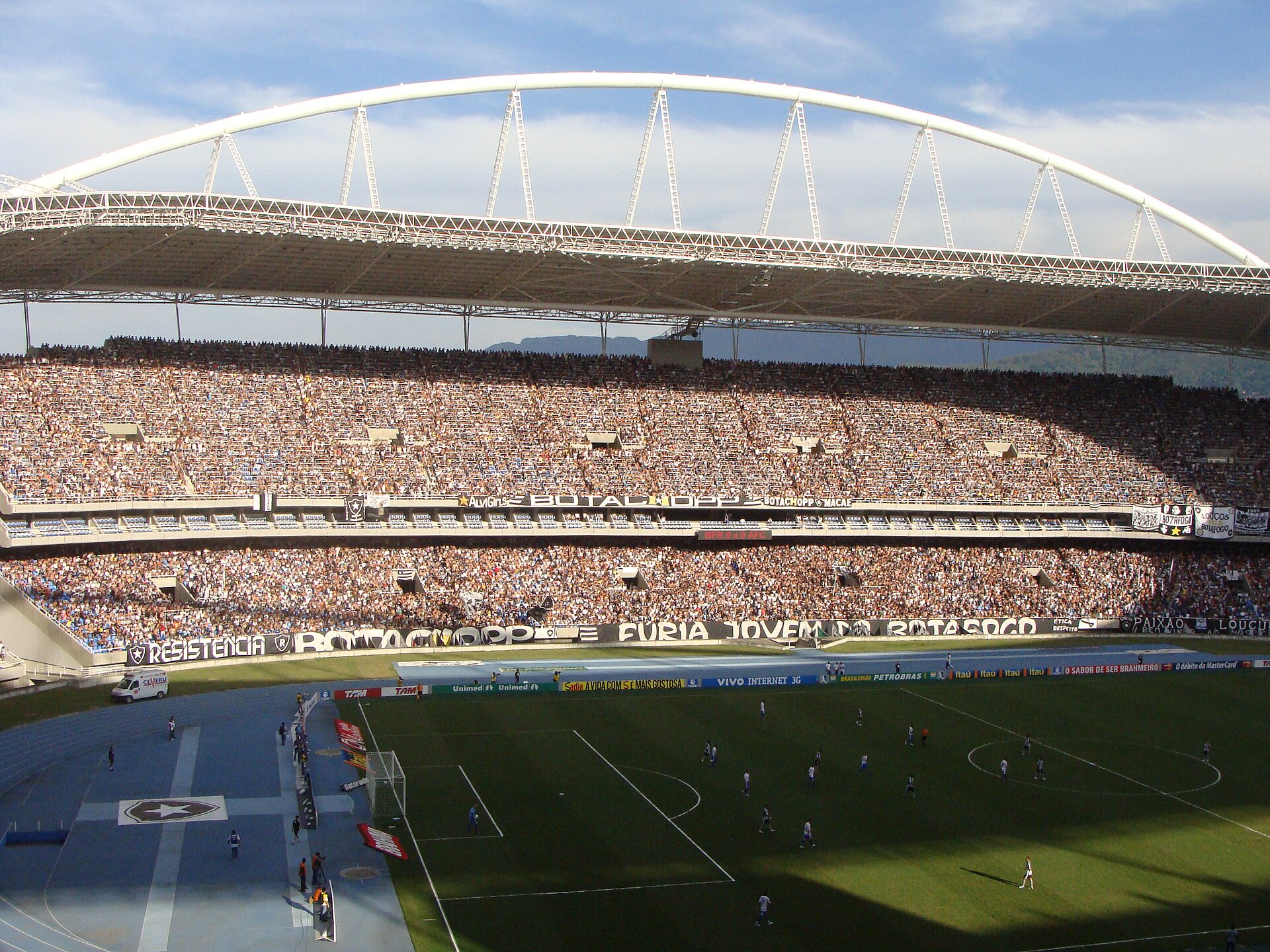
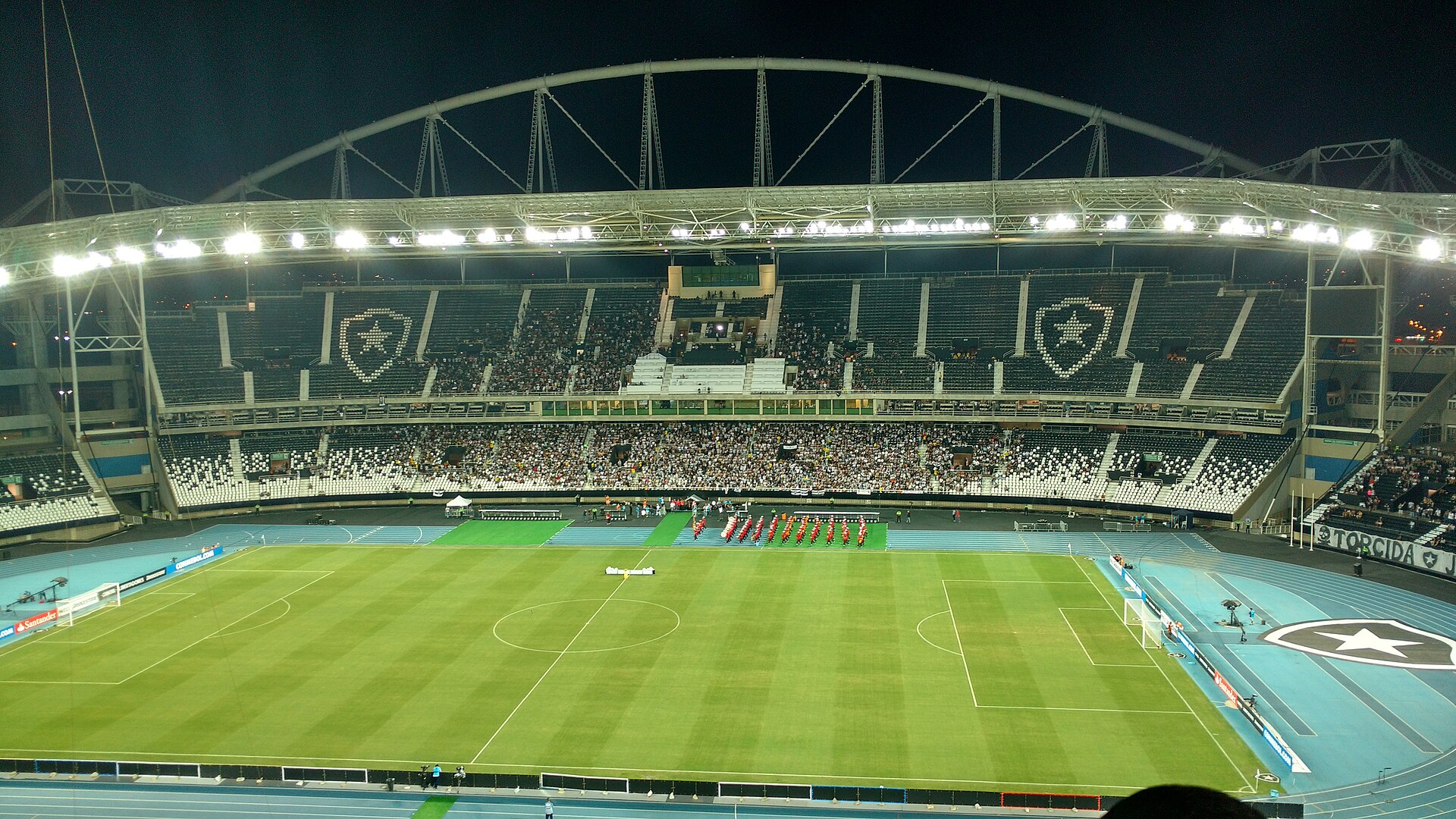
The ground is defined by its scale and its roof. The stands rise steeply, packed with thousands of spectators who fill the tiers under the shelter of that sweeping structure. Below, the pitch sits within a blue running track, a feature that separates the players from the crowd and adds a layer of distance to the atmosphere.
The Estádio Olímpico Nilton Santos has always been a fixture in Rio de Janeiro, but its character shifted significantly after 2013. Structural concerns forced a closure that lasted two years, during which the roof was reinforced and the interior was reshaped. When it returned, the space felt larger, the sightlines clearer, and the seating more uniform. The artificial surface, which received a new layer in 2025, has become a point of contention for fans who prefer natural grass, but it ensures the pitch remains playable regardless of the weather.
Botafogo have called this home since the club’s move from the old Maracanã, a relocation that some supporters still view as a compromise. The team plays here under a lease that runs until 2027, and the club has invested heavily in the stadium’s branding, including the large star emblems visible in the stands. The roof, once a source of anxiety, now serves as a canvas for displays, casting long shadows across the field during evening fixtures.
The facility hosts more than just football. Concerts draw massive crowds, filling the arena with a different kind of energy, though the acoustic properties of the open design mean the sound carries far and fast. The running track, a legacy of its origins as an athletics venue, remains intact, a reminder of the stadium’s original purpose. For those who watch the games, the view from the upper tiers offers a comprehensive perspective of the match, unobstructed and wide.