Franz Horr Stadium
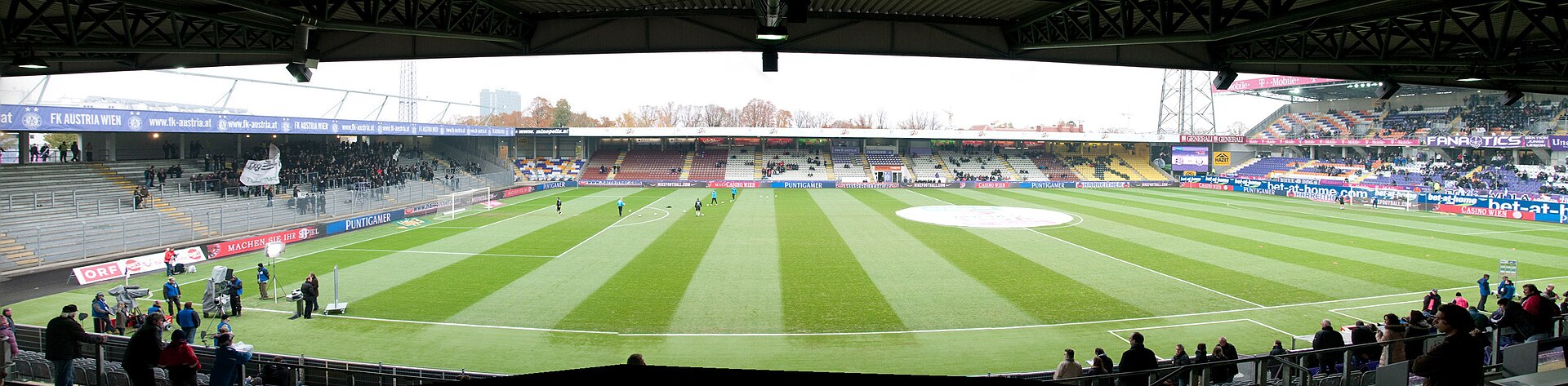
Vienna has two major grounds, but the one at Fischhofgasse carries a different weight. It is not a relic; it is a place that has had to reinvent itself. The current integrity of the site stems from a heavy rebuild for UEFA Euro 2008, which brought the capacity up to around 53,000 for the tournament. Since then, it has settled into a quieter rhythm, hosting FK Austria Wien in the Bundesliga and serving as a neutral venue for major finals.
What defines the place today is the tension between its history and its modern form. The original structure dates back to 1925, built for the Czech immigrant club SK Slovan Wien as České srdce. Over the decades, the name changed twice more—first to WFV-Stadion, then to Franz-Horr-Stadion—before settling on the current Generali Arena. The old elliptical roof, designed by Erich Frantl during the 1984–1986 renovations, remains a defining feature, though the surrounding stands have been stripped and rebuilt. The pitch itself is natural grass, but it is a heated surface, a necessity for the climate that ensures the game can flow regardless of the weather outside.
There is a silence here that does not exist at the other stadium. The capacity now sits at 13,400, a fraction of what it held for the 2008 final. The crowd for the Austria Wien derby on December 16, 2018, was 16,582—a record that stands in the current configuration. The atmosphere has shifted. It is no longer a temple for 50,000 voices; it is a working ground where the table goes out of the window in these games, but the scale is intimate. It is not a legendary ground in the romantic sense; it is a functional space that has survived every attempt to replace it.