Stadiumi Selman Stermasi
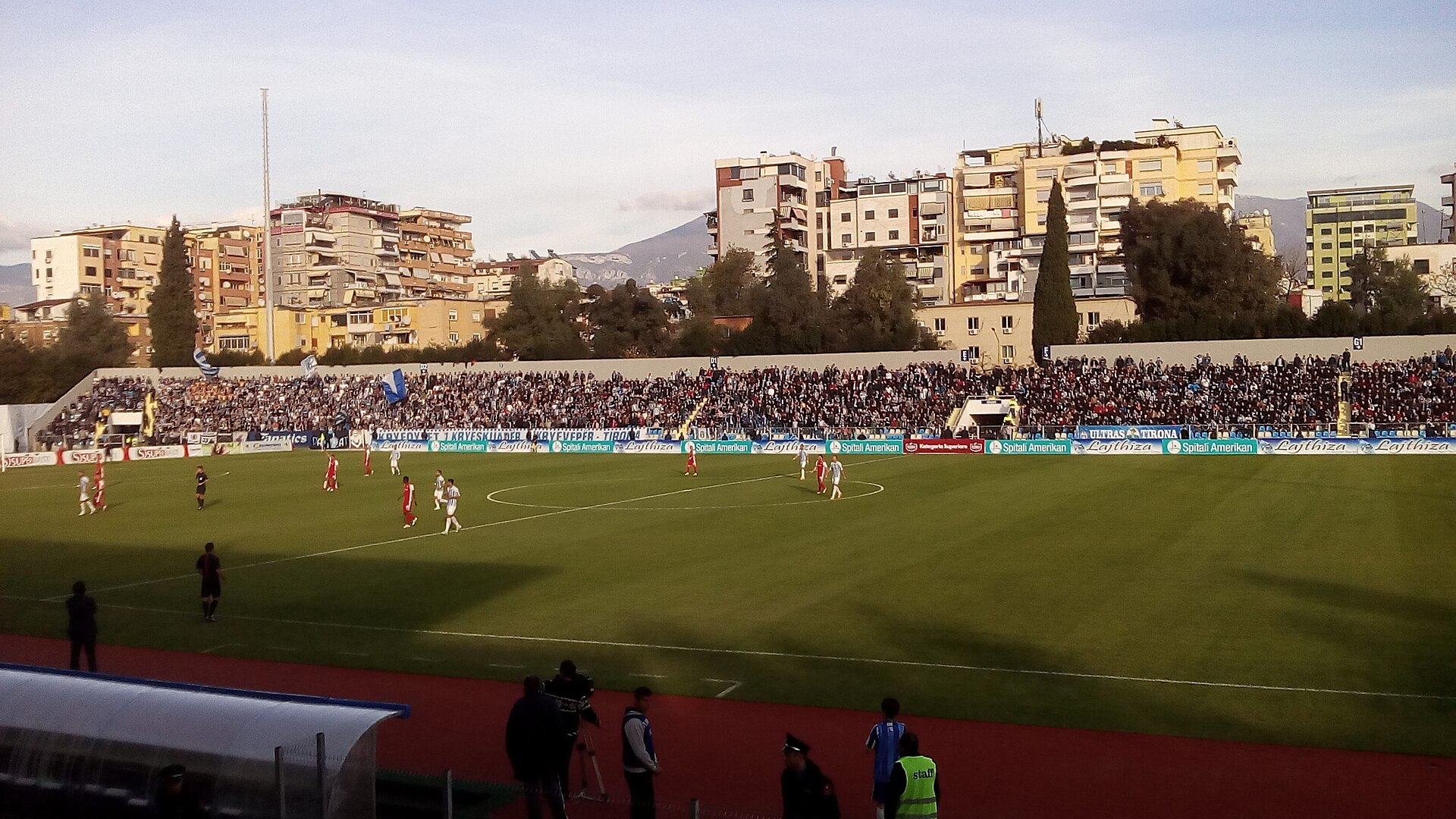
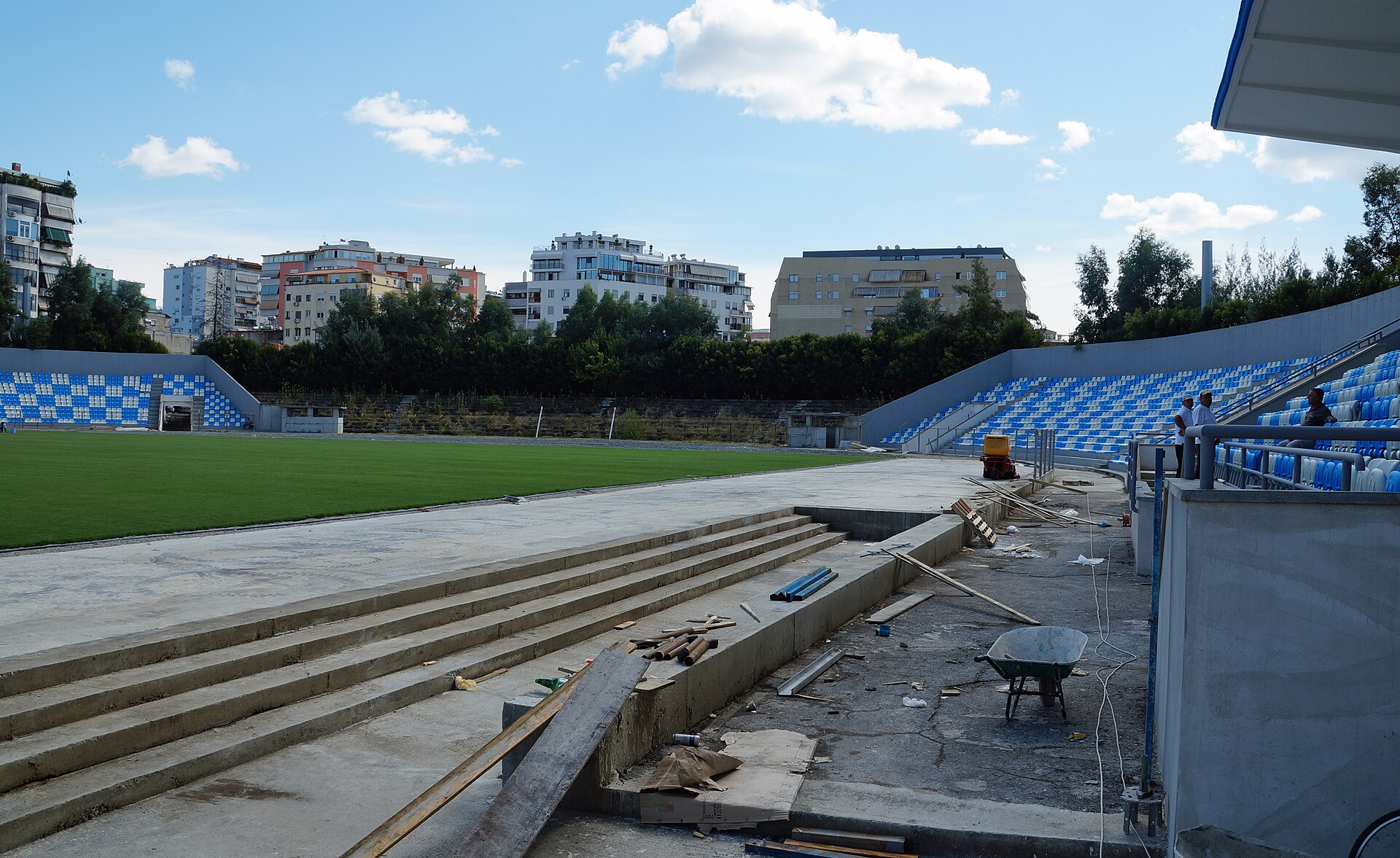
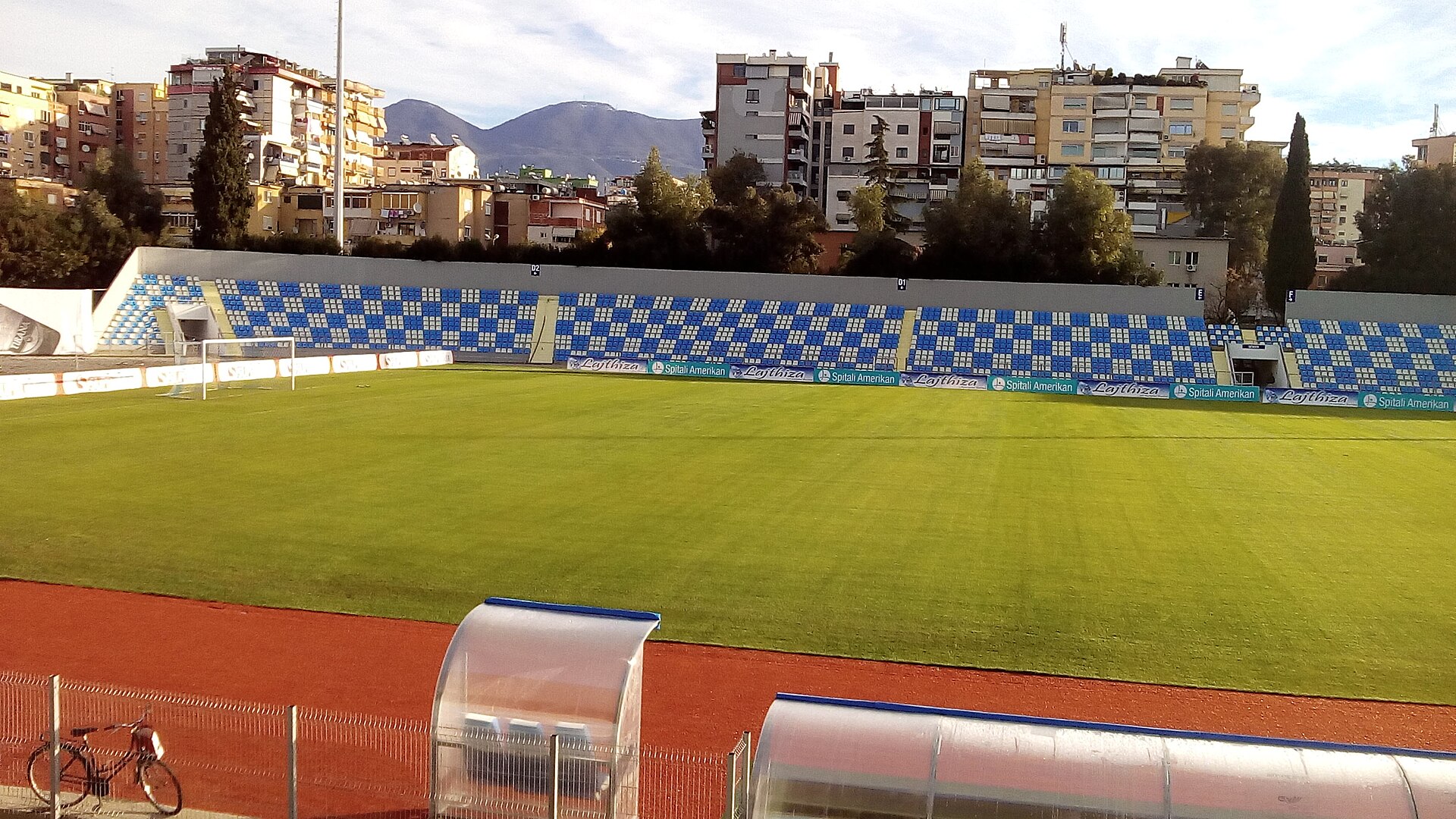
The ground at Ruga Muhamet Gjollesha sits between the city blocks and a distant mountain range, its perimeter defined by a red running track rather than immediate urban sprawl. The view from the stands reveals a sea of blue and white plastic seats arranged in a strict checkerboard pattern, an aesthetic choice that gives the venue a clean, orderly look even when empty. Stadiumi Selman Stermasi owes its current appearance to a renovation completed in 2014, which replaced the old concrete terraces with all-seater stands and modernized the pitch. Before that overhaul, the stadium had known a different era, originally constructed in 1956 as the Dinamo Stadium under the socialist regime.
Today, the pitch is natural grass, maintained to a standard that hosts three of the city’s historic clubs: KF Tirana, FK Partizani, and FK Dinamo. The atmosphere shifts depending on who is playing. When the supporters of the "Big Three" fill the stands, the energy is palpable, yet the physical structure remains simple. There are no luxury boxes or soaring roofs; just the concrete banks and the advertising hoardings that line the perimeter. The stadium has seen its share of tense moments. A match between KF Tirana and FK Partizani drew a crowd that would later become the subject of debate, with records citing either 36,000 or 20,000 spectators for the same fixture decades ago. The truth remains uncertain, but the memory of such packed stands endures.
Unlike the gleaming new complexes planned for the future, this ground feels grounded in its past. It has hosted the Albanian Superliga and local derbies without ever staging a major international final. The renovation promises a new era, but for now, the stadium stands as a quiet monument to the city’s football history, its blue and white seats waiting for the next matchday.