Åråsen
Lillestrøm, Norway

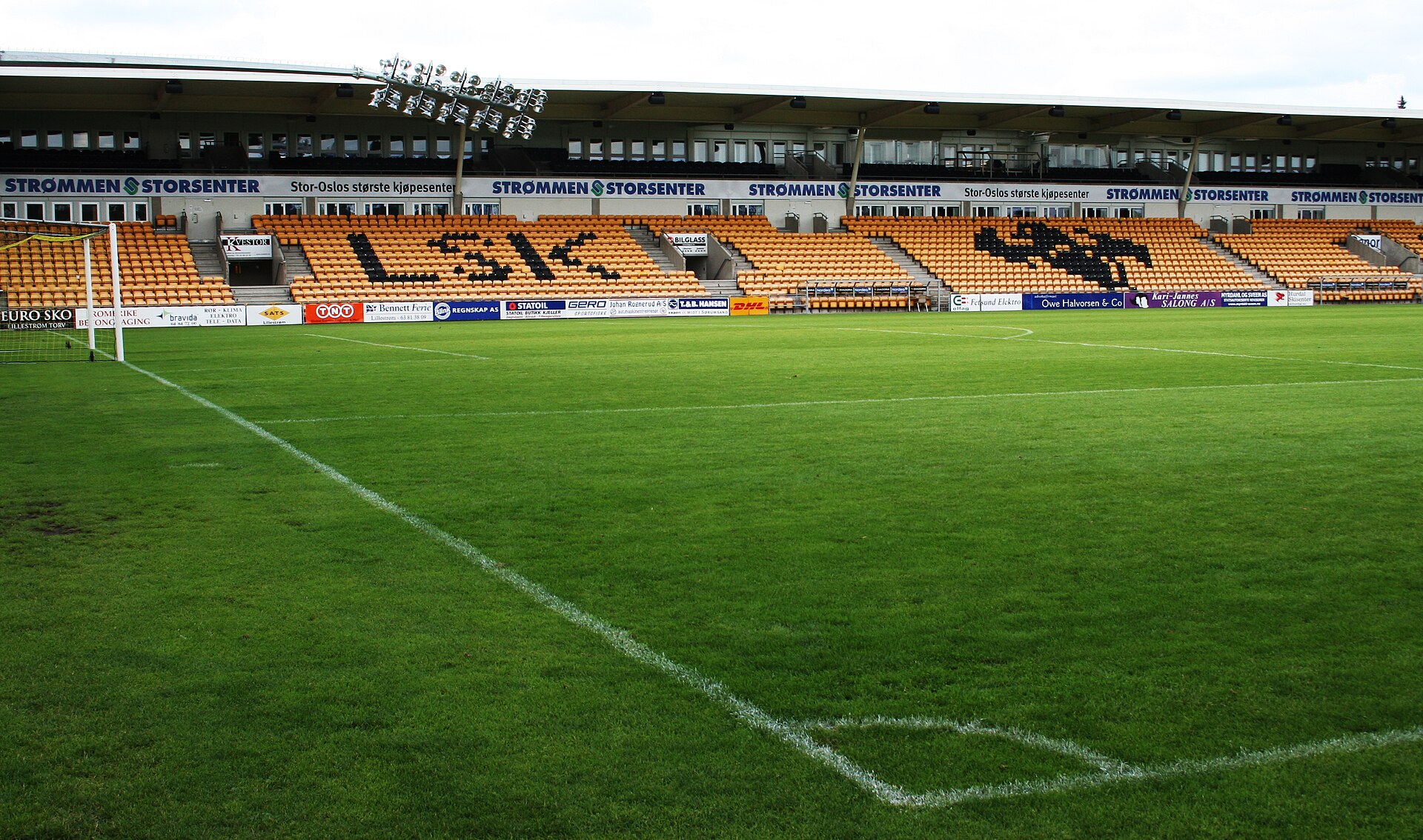
The ground sits at the edge of Lillestrøm. What makes Åråsen Stadion different from the modern arenas that have sprouted across the country is its mix of old timber and new concrete. The East Stand, built in 1978, remains the oldest surviving piece of the structure, while the rest of the complex was reshaped into an all-seater facility between 1999 and 2002. The cost of that renovation was heavy, but the result was a roof that sits low, partly because the nearby Kjeller Airport restricts how high any structure can rise.
Lillestrøm SK has called this place home since the stadium opened in the summer of 1951. The club dug the foundations themselves, pulling strings among local volunteers to complete the work. The original grandstand was later destroyed by fire, which forced the club to rebuild, but the character of the place stayed the same. The stands are painted yellow, and the words LSK 1917 stretch across the main seating area, marking the club's roots. The pitch itself is natural grass, laid down again in 2000, with under-soil heating to keep the surface playable when the Norwegian winter turns bitter.
It has also hosted the women's game, including matches during the UEFA Women's Euro 1997. The crowd that gathered for those games was smaller than the one that set the record here in 2002, when the stadium held nearly 14,000 fans for a match against Vålerenga. Today, the capacity is set at 10,540. The stadium is not famous for its size, but for the way it holds the history of a club that has ground out the win through decades of change. The wind coming off the fields to the north is a constant presence, often ruining any passing game for the visiting side.