Bremer Brücke
Osnabrück, Germany
Formerly: Kampfbahn Bremer Brücke, Piepenbrock-Stadion an der Bremer Brücke, Osnatel-Arena
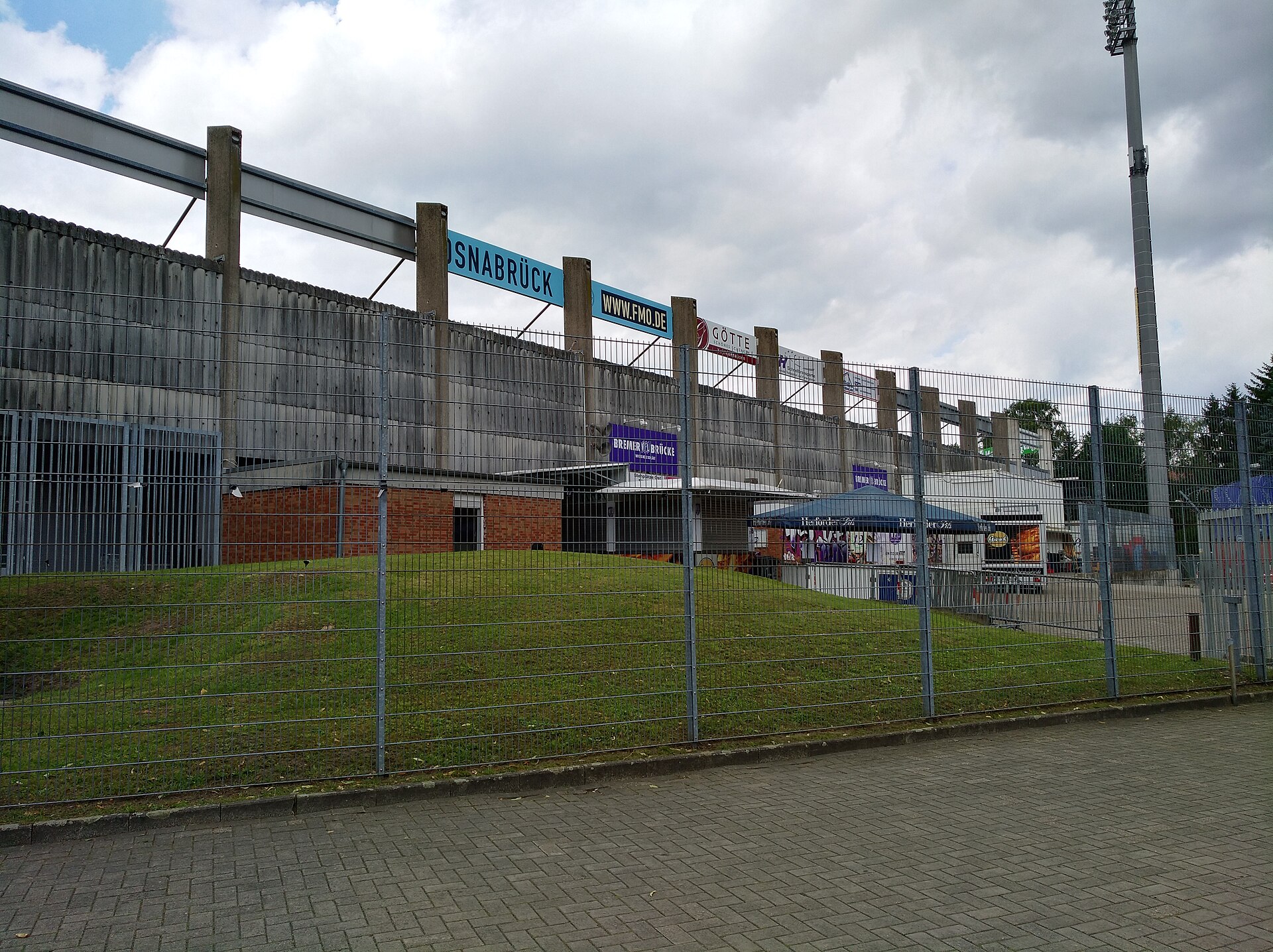
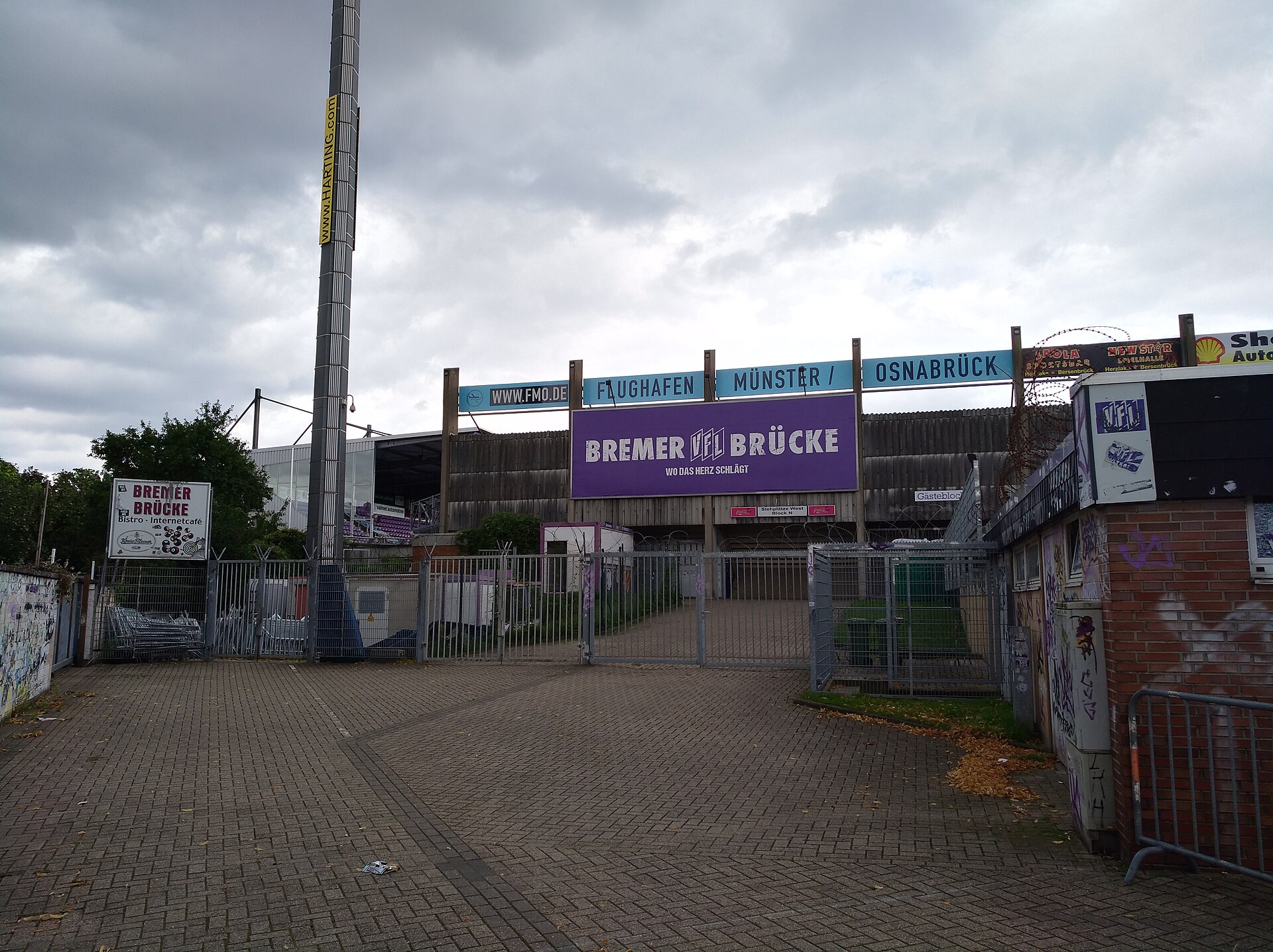
The pitch is natural grass, and the wind moves straight through the open stands. On a matchday, the crowd uses blue and white cards to fill the gaps in the concrete, creating a solid block of colour that looks different from the painted seats of the newer arenas. It is a smaller ground, and that intimacy means the noise stays within the boundaries of the concrete bowl.
The history of the place is written in its names, which have changed more often than the club’s fortunes. It was built by the local club SC Rapid, which later merged with VfL Osnabrück, using labour from the Reichsarbeitsdienst. That origin story is one of a city trying to keep its team competitive with what little it has. The renovations in the two-thousands gave it modern facilities, but the bones of the building remain the same.
It has hosted a European final and a cup semi-final, but the days when thirty-five thousand people packed into the stands are long gone. Now it is a place where the team and the town share the same space, without the separation of a luxury box. The road leading to the stadium is paved with bricks, and the entrance gate is simple metal, not a turnstile system that feels like a border crossing.