Crasus Dome Oita
Oita, Japan
Formerly: Ōita Stadium, Kyushu Oil Dome, Ōita Bank Dome, Showa Denko Dome Oita, Resonac Dome Oita
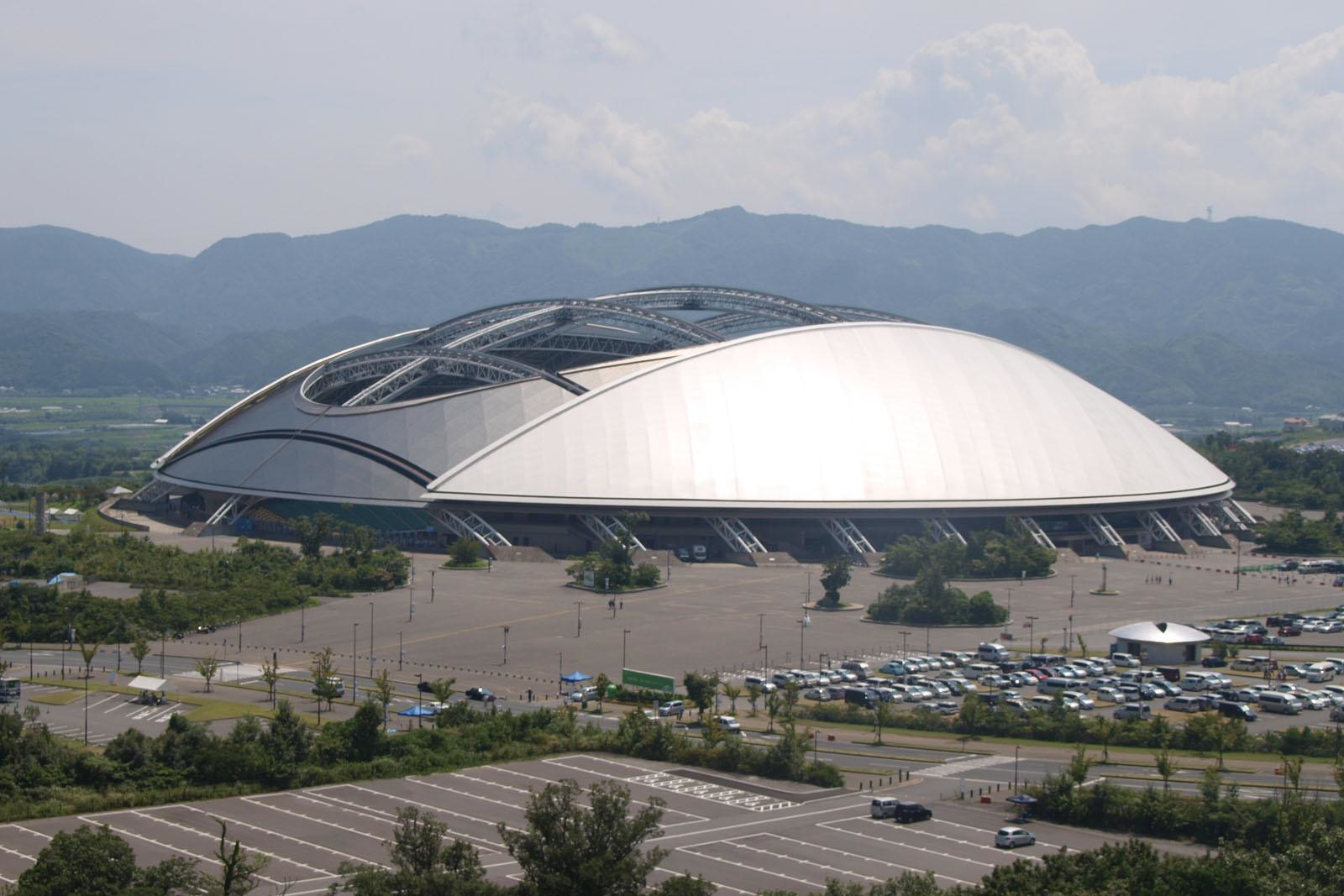
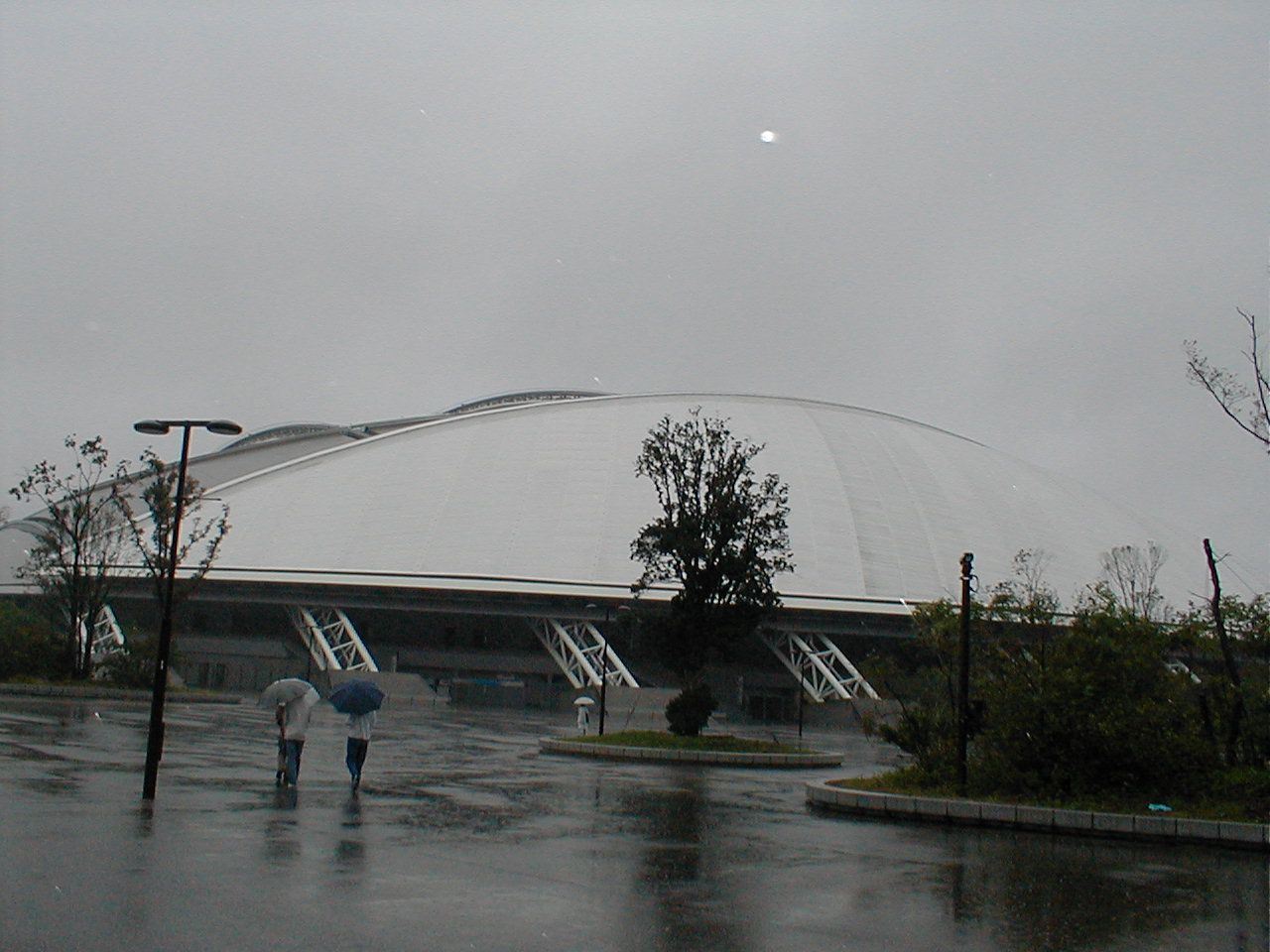
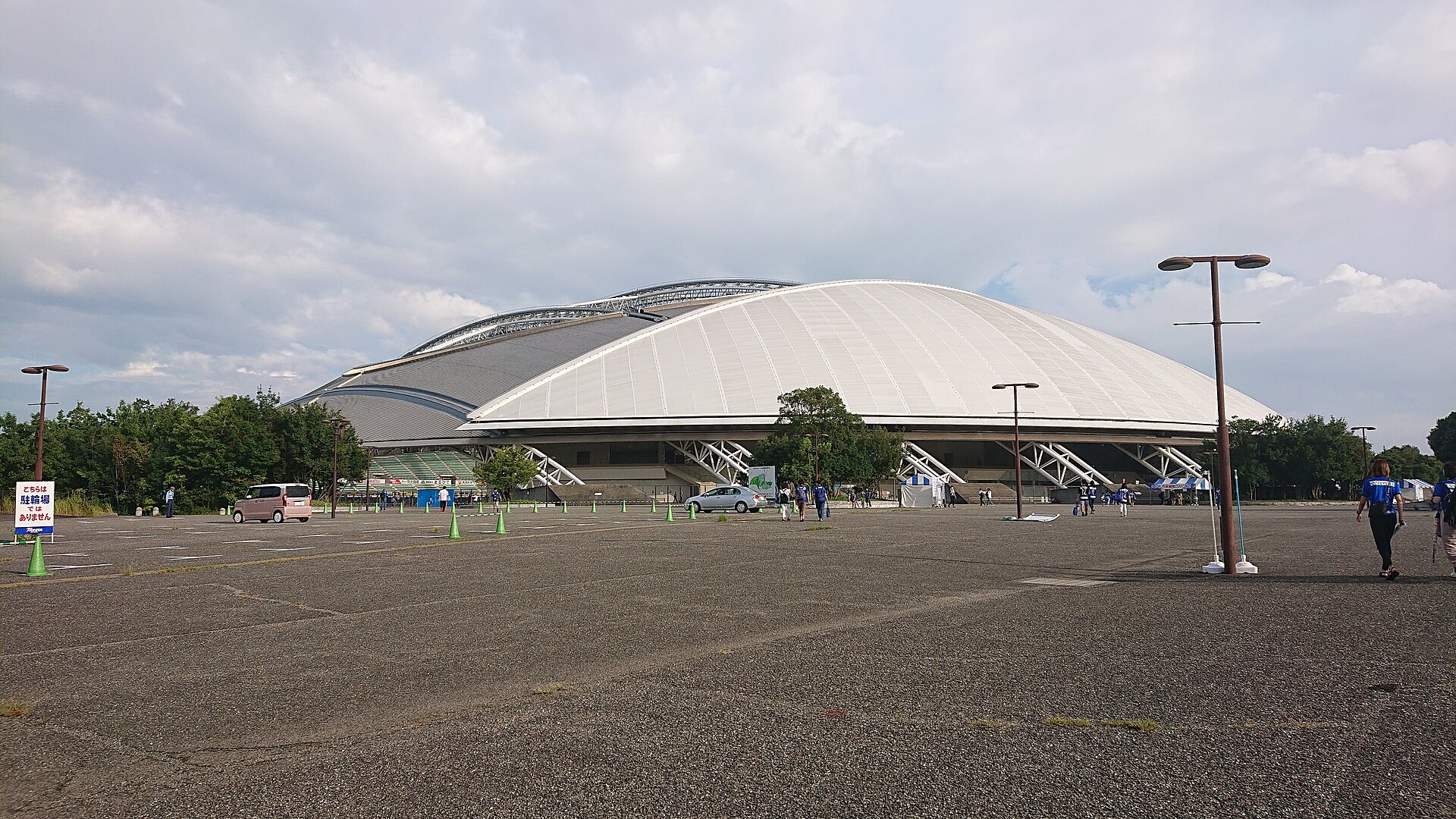
The ground is dominated by a sweeping white roof that curves over the stands, shaped like a closed eye. This is Crasus Dome Oita, a stadium that has been called by a different name almost every few years since it opened. The structure sits against a backdrop of green mountains, and the vast asphalt forecourt in front can swallow a large crowd before they even reach the turnstiles. You can see the supporting trusses lifting the light roof clear of the seating bowl, a design choice that lets the air circulate when the weather turns, as the second image shows. Two figures with umbrellas walk across the wet tarmac in that shot, a reminder that the open setting is exposed to the elements.
It was built for the 2002 FIFA World Cup, which means it hosted matches that still define the history of Japanese football. The capacity was trimmed down after that tournament to save money, leaving it with 40,000 seats today. The change is visible if you walk around the perimeter: the running track that once carried spectators is now empty. The club Oita Trinita plays their home games here, and the atmosphere is different from the packed arenas in Tokyo or Osaka. There is a sense of space, and the mountains loom closer than you expect. The retractable roof is a feature that draws attention, though it seems to be used mostly to protect the natural grass pitch from the heavy summer rains.
The sponsors have changed the name so often that the local fans have a nickname for it that sticks better than any official title. They call it Big Eye.
The pitch is natural grass, kept in good condition despite the low humidity in the valley. It is a functional ground, not a boutique venue, and that is what makes it work for the team. They have nothing to lose when they play here, and the width of the playing area allows them to switch shape at the break without feeling constrained. The history between the home side and their visitors adds an edge, even if the architecture is purely modern. It is a place where the game is played under a shell, far from the city centre and the noise of the streets.