Diego Armando Maradona
Buenos Aires, Argentina
Formerly: Estadio Argentinos Juniors
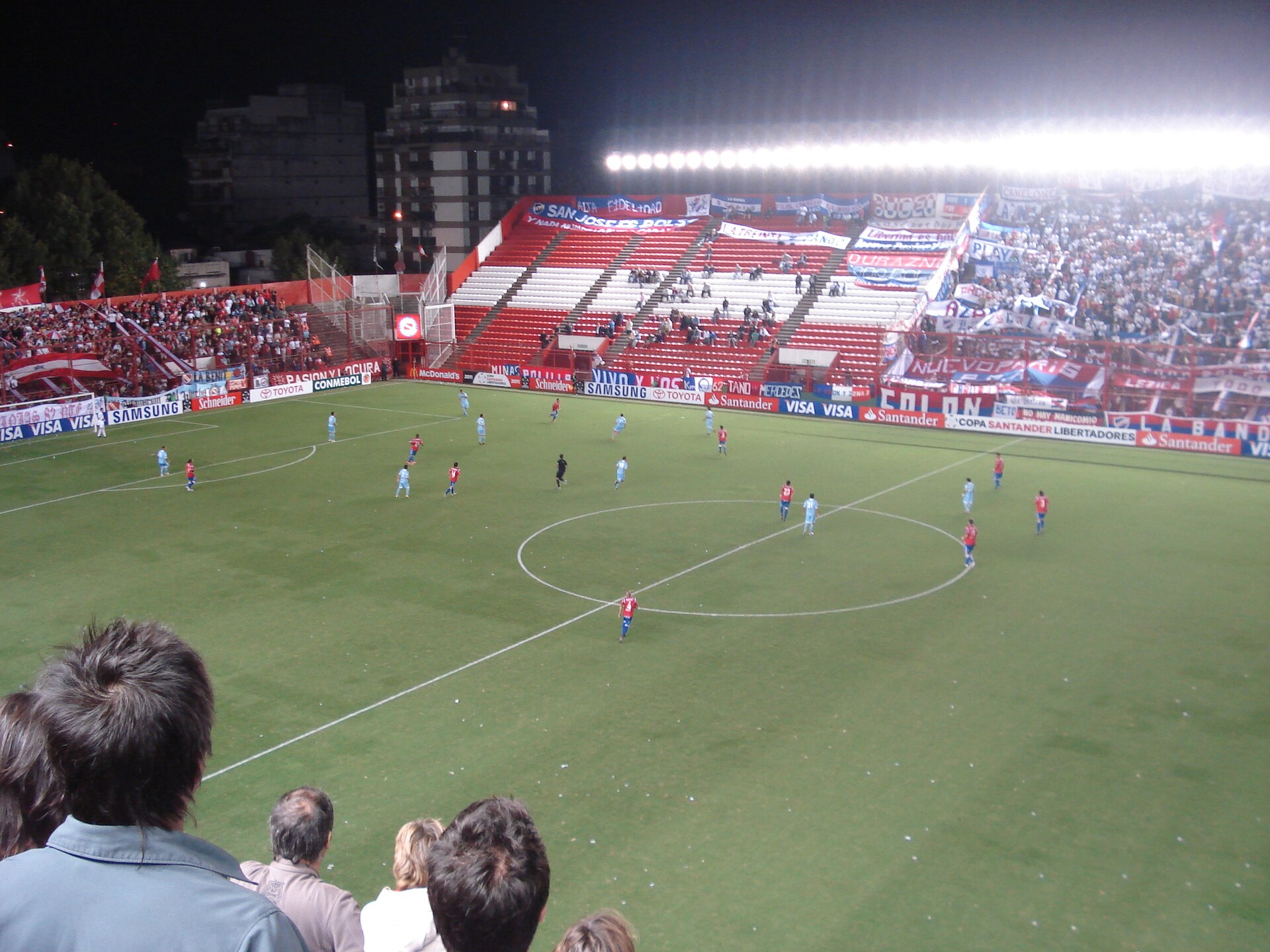
The ground sits in a residential quarter of Buenos Aires. What distinguishes it immediately is the architecture of the stands. One side rises in a steep flight of concrete tiers. The other side is more subdued, a simple bank of seats that leaves the south goal open to the sky, a deliberate choice made when the pitch was laid out longer than the old field allowed.
The stadium is the club's own creation, built with its own money after the original wooden pavilions were torn down. It feels like a place that has settled into the neighbourhood rather than dominated it. The atmosphere remains grounded.
There is a weight to the name on the board, but the place does not seem to live in the shadow of its former player. Some seats are empty, others are packed tight, but there is a rhythm to the way fans occupy the space that suggests experience.
When the game is underway, the view from the stands is clear. Players move across the turf without obstruction, and the sound of the ball being struck carries easily across the enclosure.