Estadio Monumental Banco Pichincha
Guayaquil, Ecuador
Formerly: Estadio del Barcelona Sporting Club, Estadio Monumental de Barcelona, Estadio Monumental Isidro Romero Carbo, Estadio Monumental Banco Pichincha
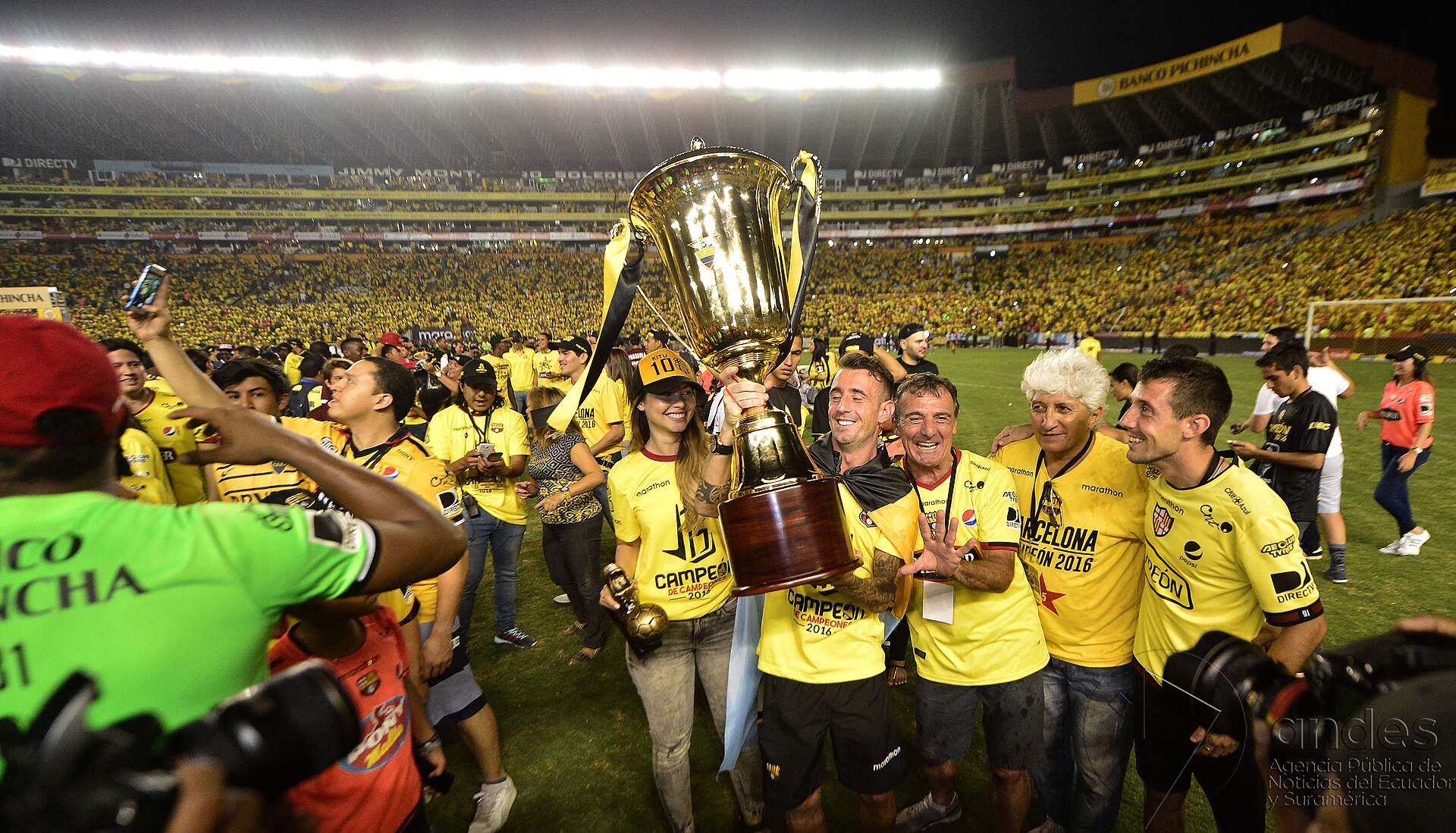
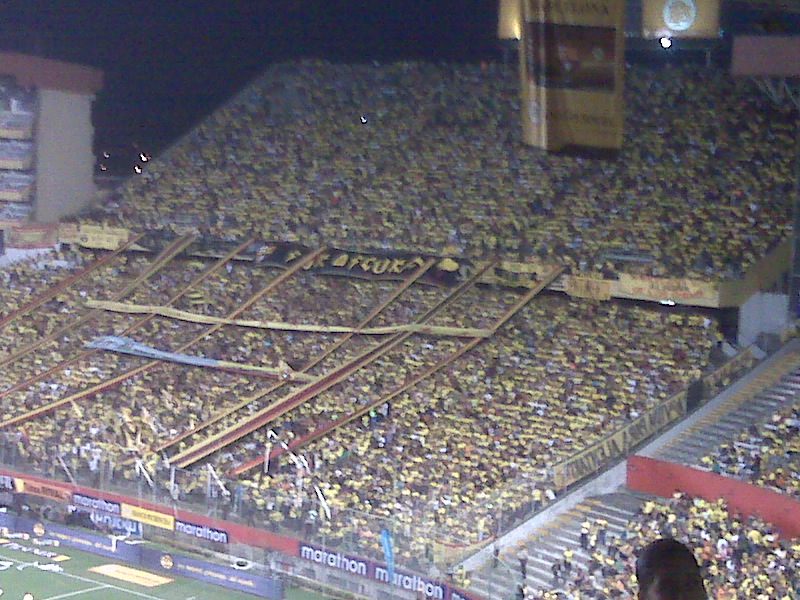
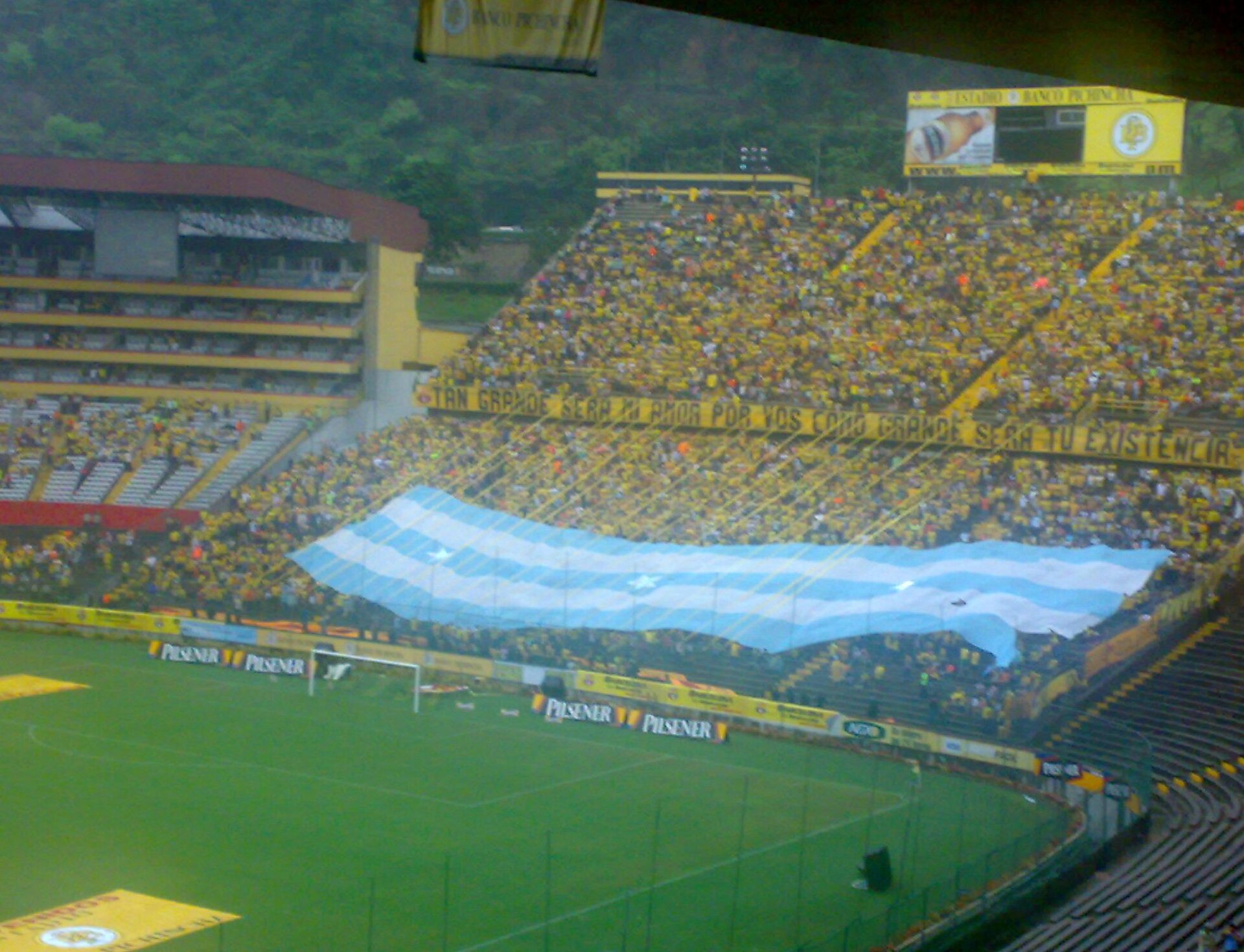
The Estadio Monumental Banco Pichincha sits in Guayaquil, Ecuador. The venue opened in 1987, designed by José Viteri, and was originally named after its primary tenant, Barcelona Sporting Club. It is now officially known as the Estadio Monumental Isidro Romero Carbo, a name given to honour a former club president.
Inside, the ground has settled into a permanent shape following safety regulations that replaced standing terraces with individual seats. The capacity sits at 57,267 for international matches, a figure that has fluctuated wildly since the 1993 Copa América, when the stadium briefly held nearly 90,000 people before the changes were implemented. The pitch is natural grass, maintained with an automated irrigation system.
The architecture is functional, with concrete tiers rising steeply from the touchline. Advertising hoardings line the perimeter, featuring local brands like Pilsener and Marathon, while the floodlights cut through the evening air. The stadium has hosted significant tournaments, including the 1993 Copa América Final and several Copa Libertadores finals, but its daily life revolves around the local league. It also hosts the Ecuador national team when they play in the region.
The atmosphere inside is dense, with fans packed onto the concrete steps. The proximity of the crowd to the action is notable, particularly behind the goals where the noise concentrates. The stadium has seen its share of controversy, including a disputed attendance figure for a 1990 Libertadores final that never made it into the official record books. Today, it remains a fortress for the yellow army, one of two giants in Ecuadorian football, though its rival plays elsewhere.