Estadio Municipal Lucio Farina Fernandez
Quillota, Chile
Formerly: Estadio Municipal, Estadio Bicentenario Lucio Fariña Fernández
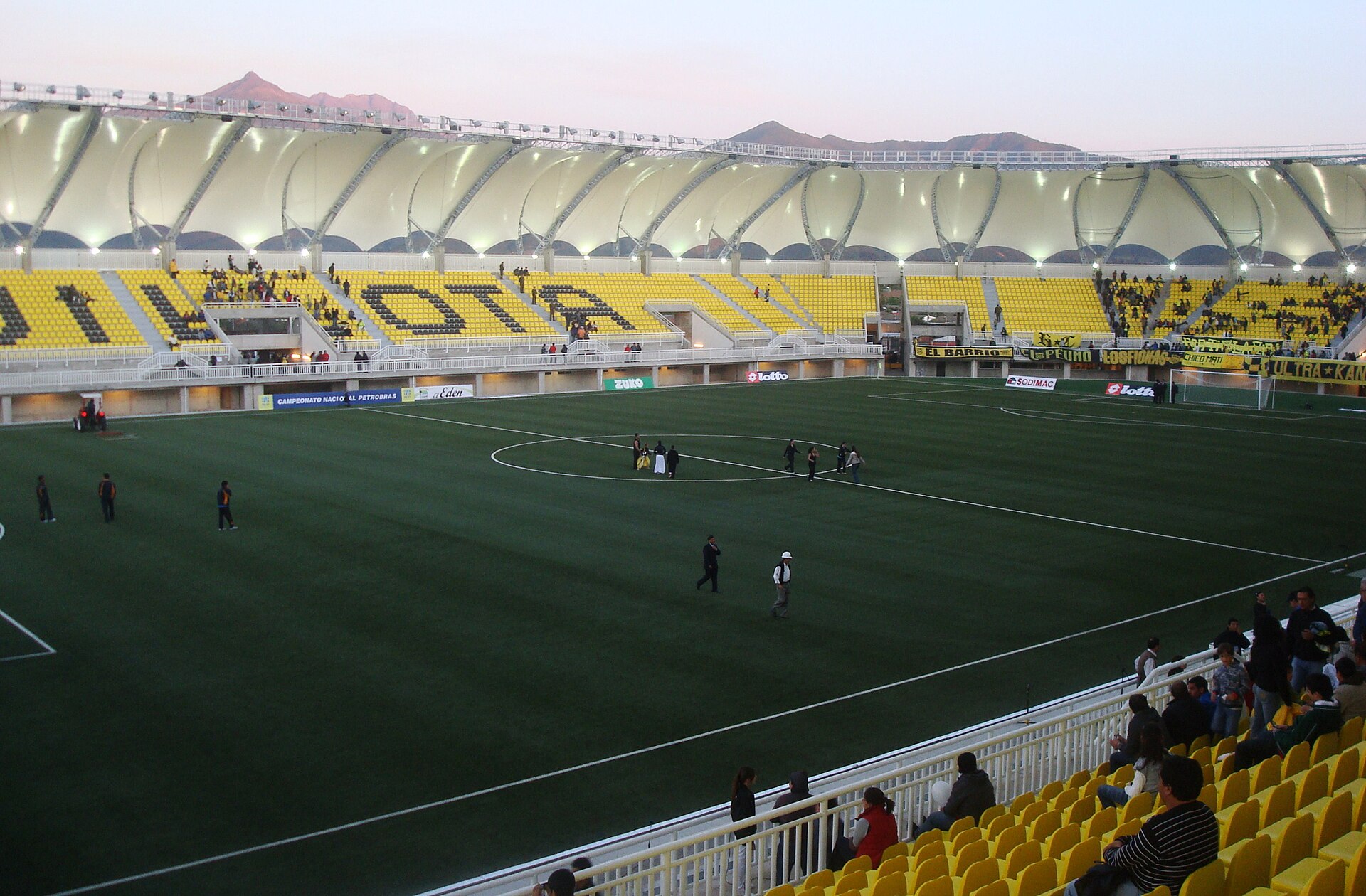
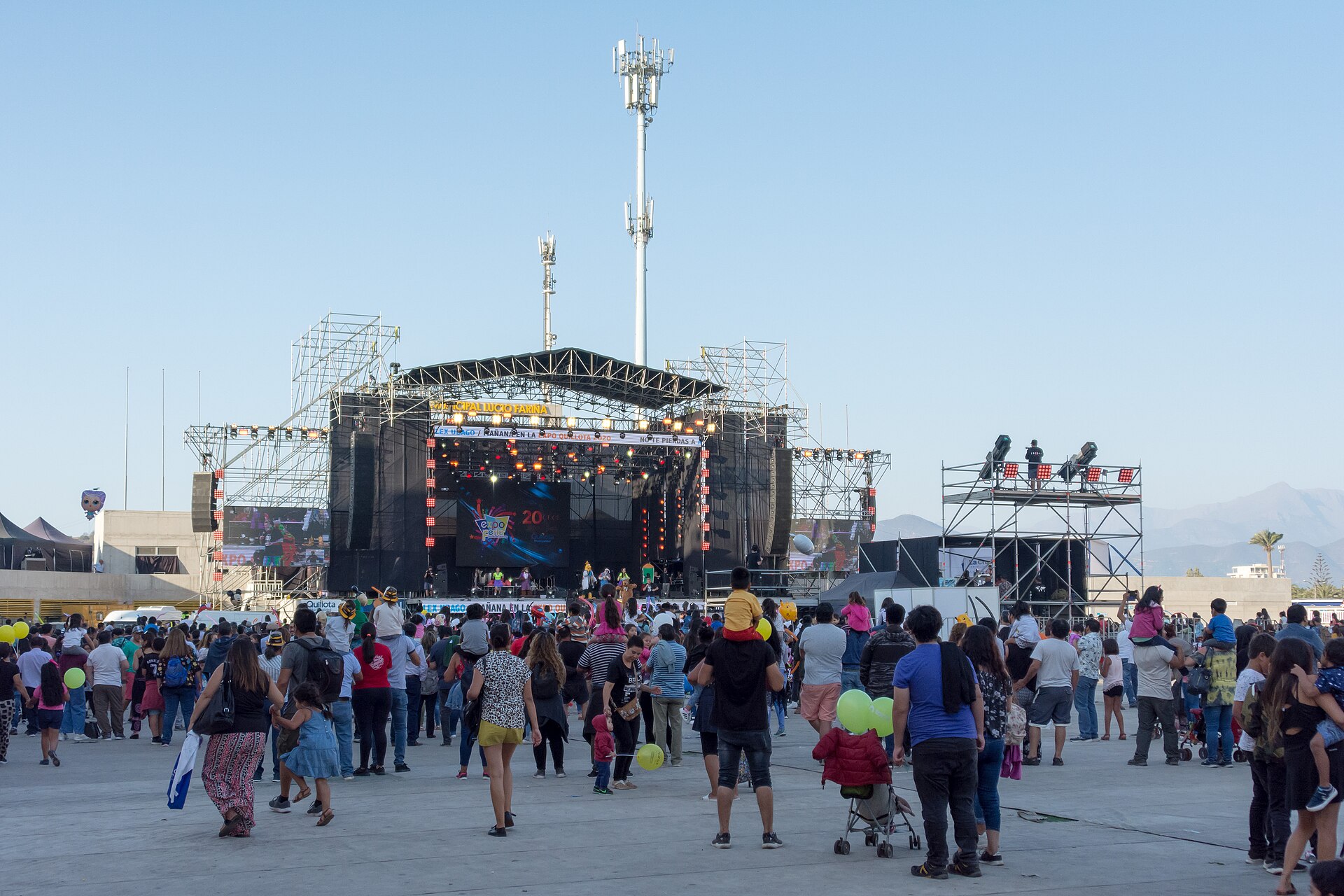
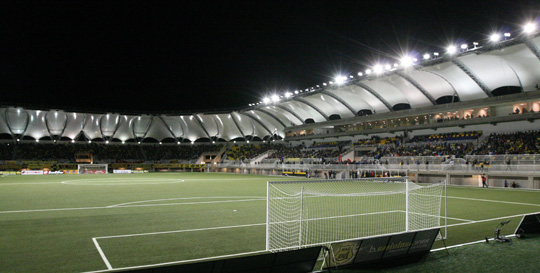
The stadium in Quillota is defined by a specific kind of visibility. It opened in 2010 as part of a national Bicentennial programme, replacing a structure that had sat on the same site since 1947. The old ground was designed by Alberto Barrera Droguett; the new one was built by Juan Zorrilla Pizarro and his team. The demolition was total. The result is a stand that is not an addition or an extension, but a single, continuous curve that wraps around the pitch.
The roof is the most obvious feature. It consists of a series of white, arched sails supported by a steel truss system. There is no solid covering between them, which means the sky is visible from the stands and the wind passes through the structure without resistance. The seating is painted in a uniform yellow, with the word "QUILOTA" formed in black seats along the main tier. The pitch itself is artificial turf. San Luis de Quillota, the primary tenant, have used the surface since the rebuild. The club considers the synthetic field a strength, allowing for consistent play in the dry conditions of the Coquimbo region.
The capacity is listed as 7,703 by the club's official website. It is not a large arena; the stands are close to the touchline, which is a deliberate architectural choice. The view from the upper tier is unobstructed. The stadium is not for sale as an event space, and its website is the same as the club's. It exists for football.
The original ground was inaugurated in 1947. It was renamed in 2002 to honour Lucio Fariña Fernández, a local sports journalist. The current structure carries his name, but the date on the plaque is 2010. A match against Universidad Católica in 2018 drew 4,812 spectators. The attendance record has not been set. The stadium is open to the sky and the city.