Estadio Primeiro de Maio
São Bernardo do Campo, Brazil
Formerly: Campo da Elni, Estádio Distrital da Vila Euclides, Estádio Arthur da Costa e Silva

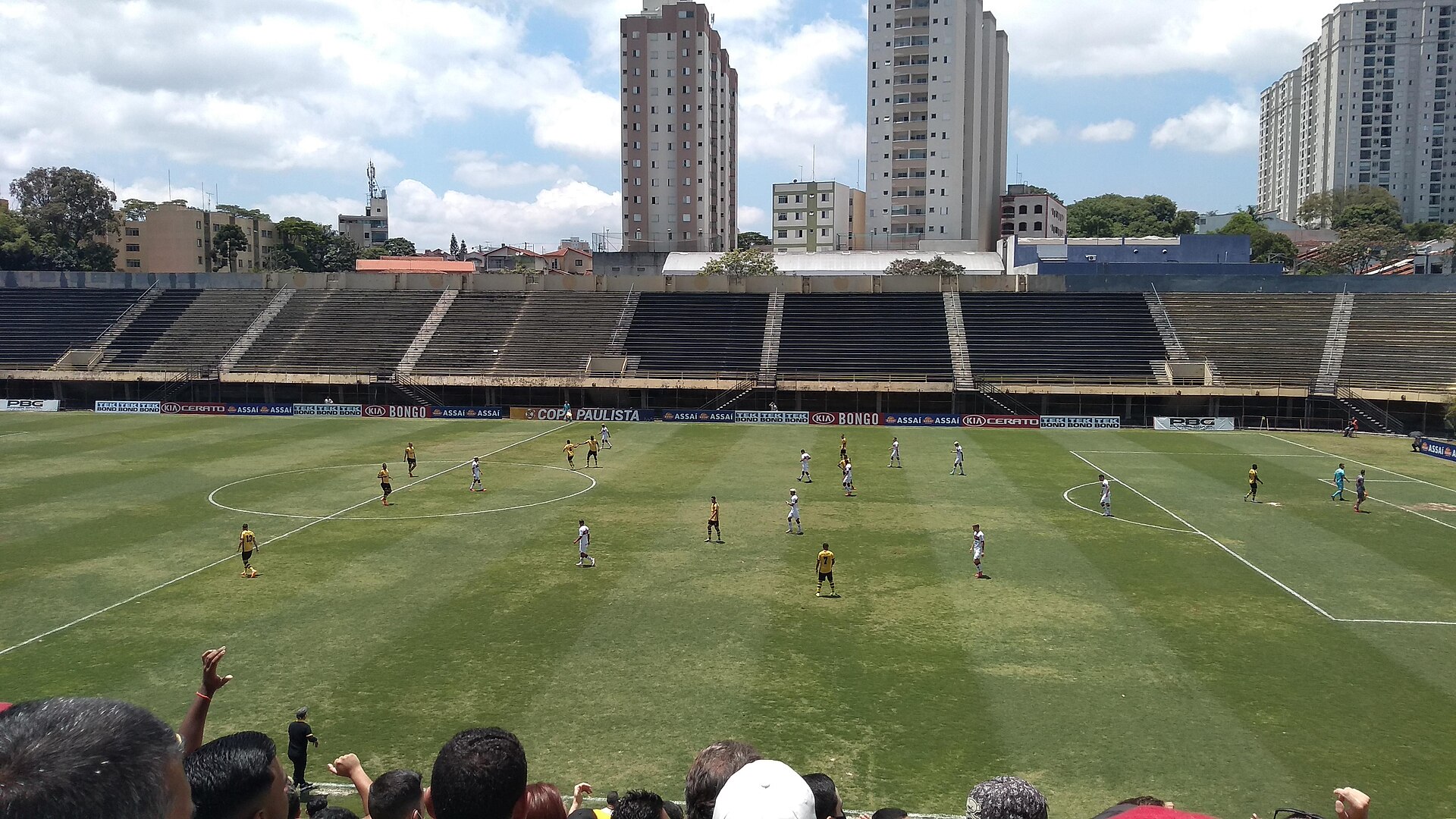
There is a small patch of dry earth near one of the dugouts, likely from recent maintenance work. The overall impression is of a working-class ground that has seen better days but remains in use. The atmosphere feels local and unpretentious, with no attempt to hide its age. The pitch itself is rectangular and marked with white lines that are crisp despite the surroundings. A few trees are visible behind the stands, providing some greenery against the concrete. The entrance to the facility is modest, without any large signage or turnstiles visible from this angle. The texture of the grass varies slightly across the field, suggesting uneven maintenance or natural growth patterns. The stadium does not attempt to project an image of modernity; it simply exists as a place for football in this part of the city. The architecture is purely utilitarian, with flat roofs and simple geometric forms. There is no attempt to make it architecturally significant. The focus remains entirely on the function of the space. The colors are muted: grey concrete, green grass, and the faded yellow of the seats. The sky above is often overcast in photographs taken here. The ground feels solid beneath the feet of anyone walking on it. It is not a place for tourism, but for those who live and work nearby. The connection to the community is evident in its continued operation despite its age. The noise from the city can sometimes bleed through when the stands are full. It is a stadium that belongs to its inhabitants, not to visitors. The history is embedded in the concrete rather than displayed in plaques. The city has maintained it out of necessity rather than nostalgia. The players who pass through it know it for what it is: a pitch where games are played under the watchful eyes of the neighborhood. The final whistle blows, and the crowd disperses back into the streets of São Bernardo do Campo. The stadium waits for the next match, unchanged by time.