Gargzdai Stadium
Gargždai, Lithuania
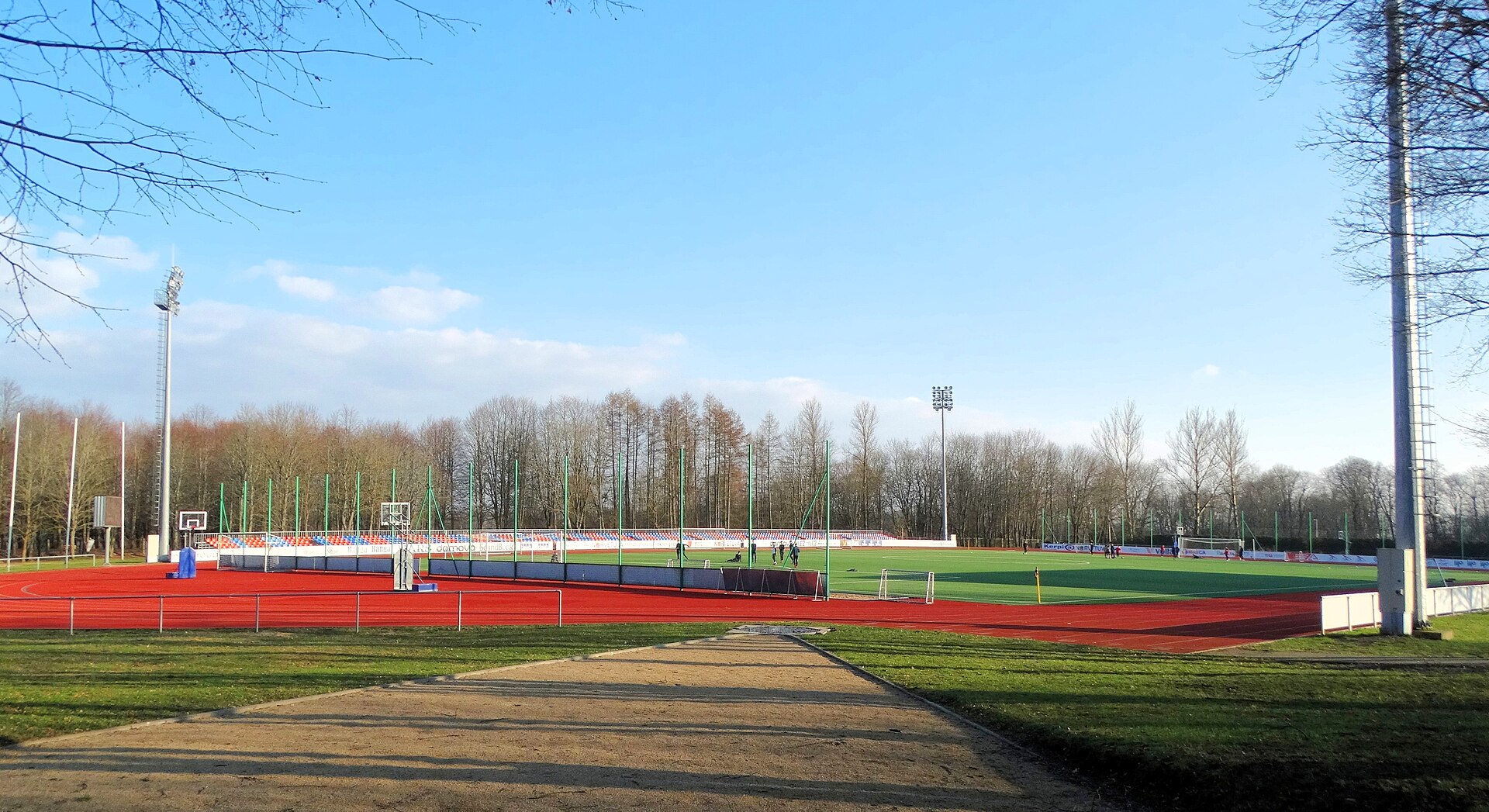
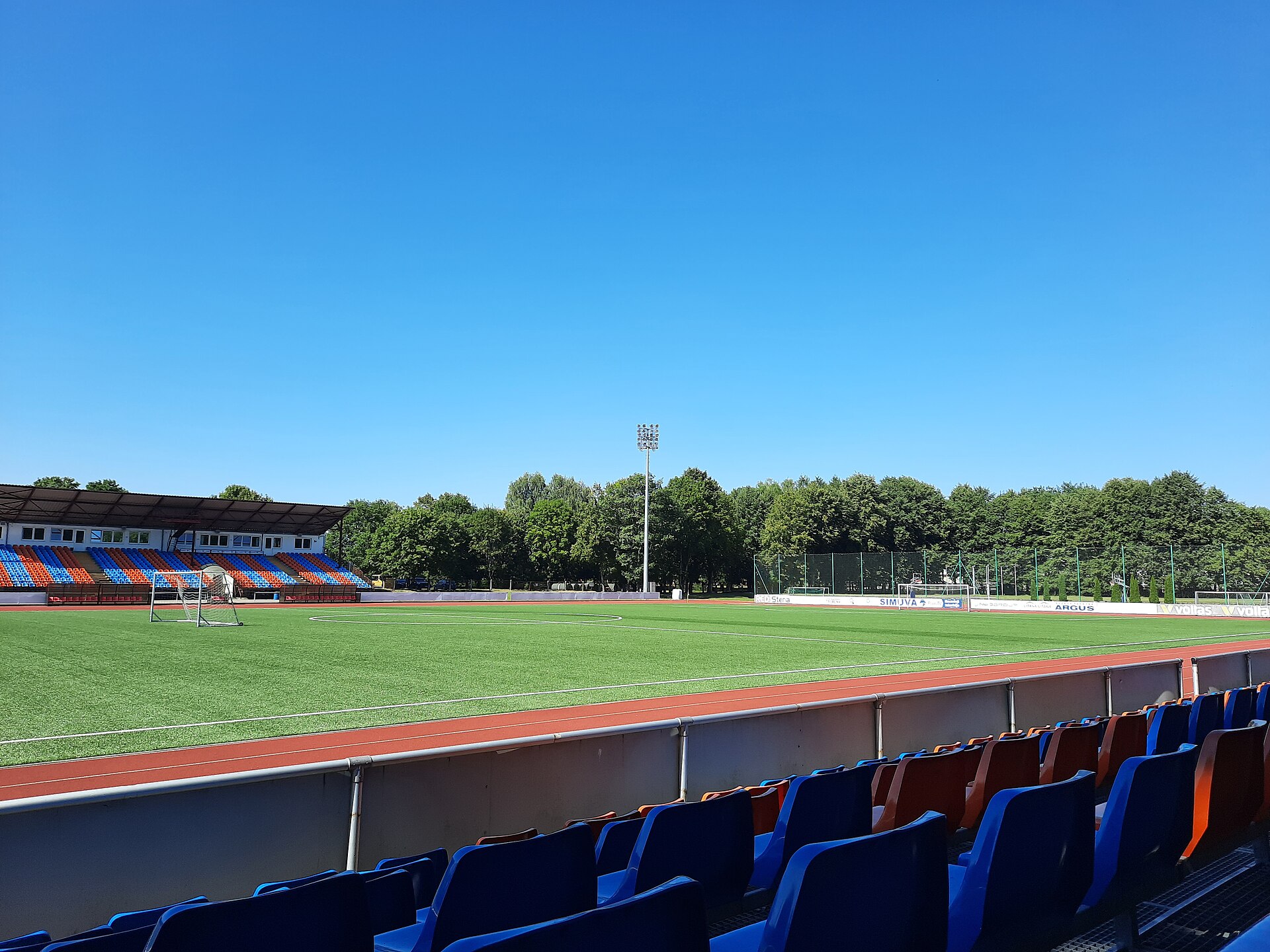
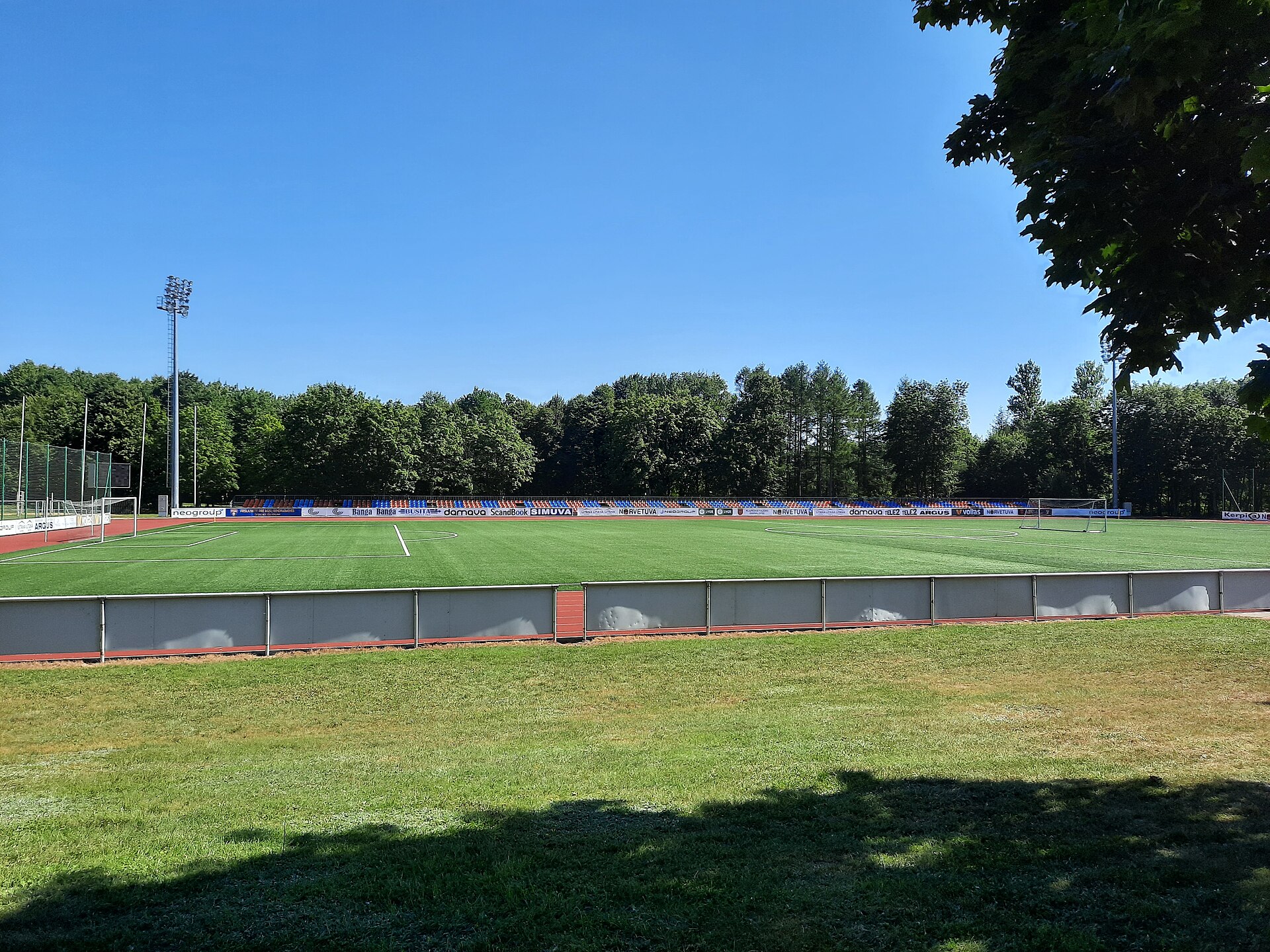
The ground at Kvietinių g. 26 does not hide behind high walls. It is a simple layout for a town that has never grown large enough to require a cathedral of concrete.
The 2009 rebuild changed the scale of the place. Before that winter, the capacity sat at just over 1,000. The following season brought a new stand with 600 seats, pushing the figure past 1,800, and the 2011 phase added the floodlights that now cast long shadows across the synthetic surface. The work cost 2 million Lithuanian litai, a sum that bought a two-star FIFA certification for the playing field and left the town with a venue capable of hosting matches that might otherwise have been played elsewhere.
The sightlines are dominated by the stands rather than the sky. One side carries a roof and blue and orange seats, while the opposite bank stretches out without cover, backed by a line of advertising boards and then the woodland edge. It is not a secluded arena; the sounds of a match would carry beyond the perimeter, but that is part of the function of a municipal ground in a small town.
FK Banga Gargždai play here. The team has spent years in the A Lyga, and the average crowds of 500 to 600 suggest that the local population turns out regularly, even if the attendance record has not been set at a match that mattered. The artificial surface keeps the ground usable through the wet Lithuanian winters, allowing the club to maintain a schedule that might be harder to keep on natural grass.
The stadium opened in 1970, though some accounts place the date in the late 1970s. It does not matter much now. The Soviet-era origins have been patched over by the 2009 and 2011 upgrades. What remains is a functional sports ground for a town that has little else to offer its residents on a Saturday afternoon.