GGL Stadium
Montpellier, France
Formerly: Stade Yves-du-Manoir, Altrad Stadium
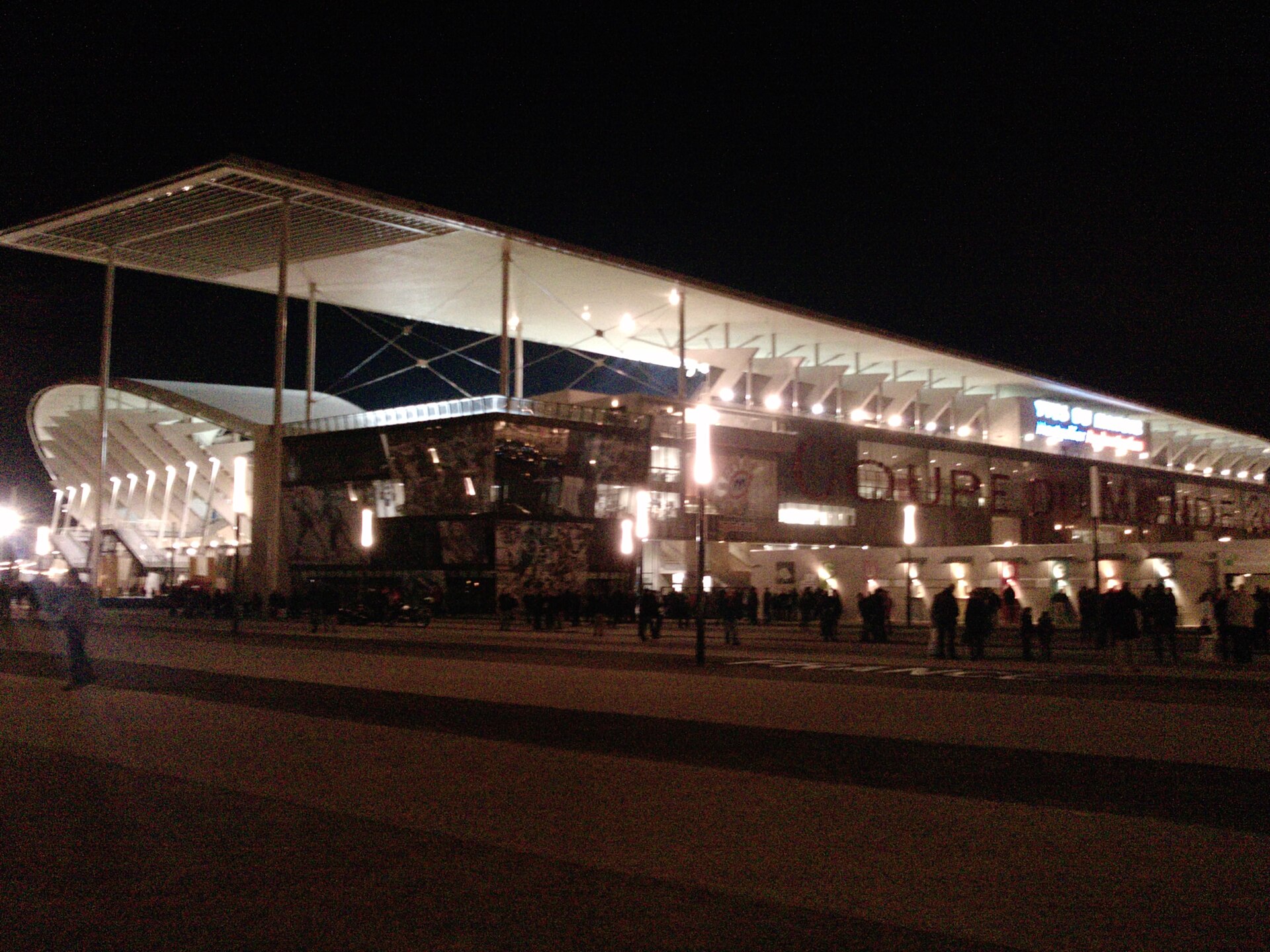
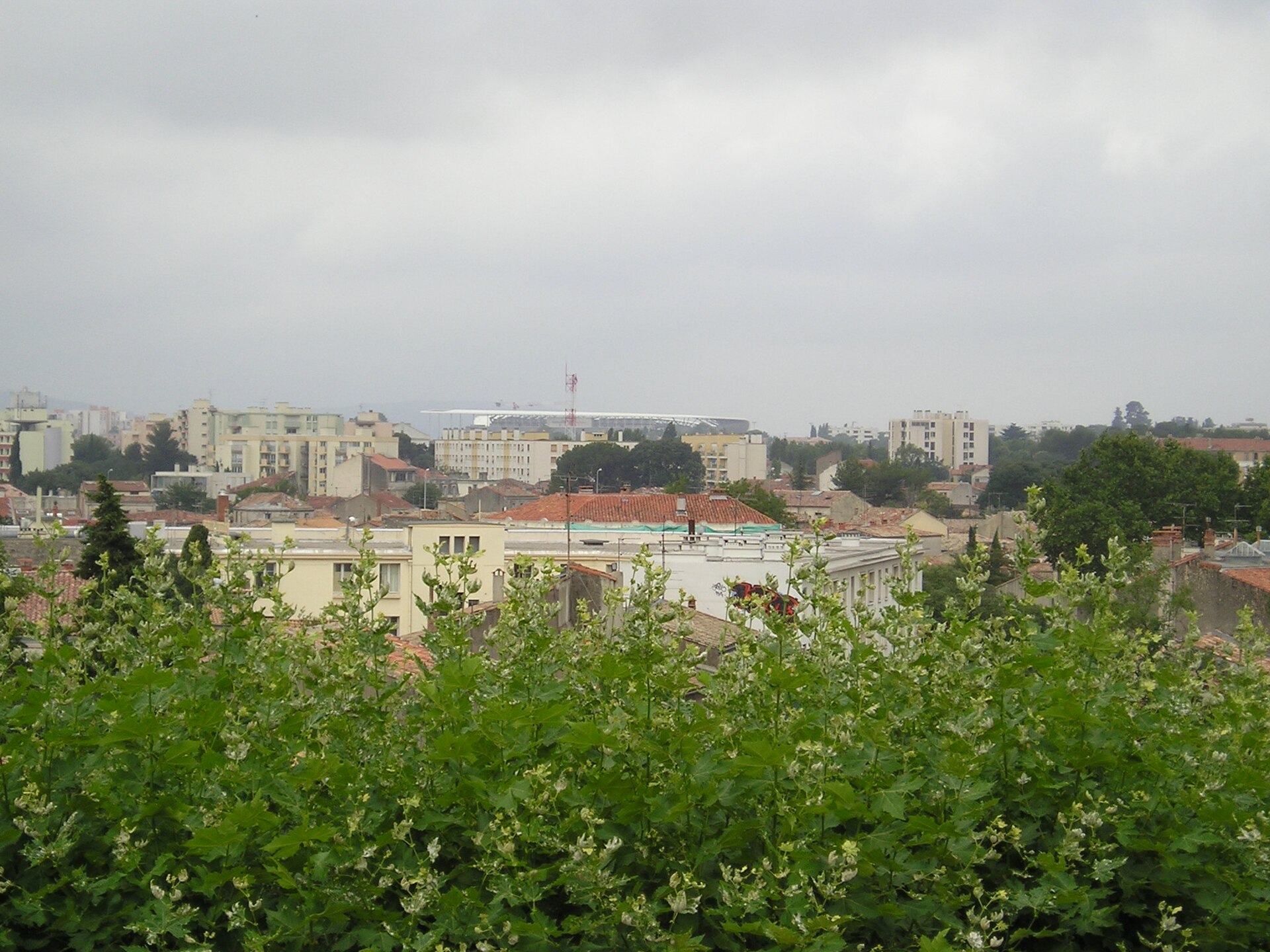
The GGL Stadium stands apart from the usual concrete bowls of Southern France. It is a structure defined by its transparency and the way it interacts with the Montpellier night. The architecture is dominated by a vast, cantilevered roof supported by slender steel columns. This canopy extends far beyond the seating bowl, creating a wide, illuminated forecourt where crowds gather. The facade is largely glass, reflecting the streetlights and the activity inside, giving the building a lightness that belies its function. It does not loom; it hovers.
The interior, visible through the glass, is a study in depth. The seating tiers rise steeply, separated by horizontal bands of glazing that break up the mass of the concrete. The colour scheme is restrained, with blue and white seats arranged in blocks. Above the main stand, the name "YVES DU MANOIR" remains painted in large white letters, a ghost of its previous incarnation. This is the stadium that reopened on 23 June 2007, replacing the old structure that had stood since 1928. The rebuild was not just a renovation; it was a complete reimagining of the space, transforming a rugby ground into a multi-purpose arena while retaining its core identity.
The capacity is modest at 15,697, with 12,667 seated places, but the intimacy is striking. The proximity of the roof to the pitch means the sound is contained, a quality that makes the atmosphere distinct on match days. The surface is natural grass, a standard feature for rugby, but the way it is presented within the new architectural framework gives it a different character. The stadium is home to Montpellier Hérault Rugby, and the connection between the club and the venue is palpable. The glass walls allow spectators outside to see into the concourses, creating a sense of openness that is rare in modern stadiums. It is a building that invites observation, not just attendance. The signage for "Montpellier Agglomération" is prominent, reminding visitors that this is a civic asset as much as a sporting one. The contrast between the sleek, modern lines of the exterior and the traditional purpose of the venue is its defining feature.