Gran Canaria
Las Palmas de Gran Canaria, Spain
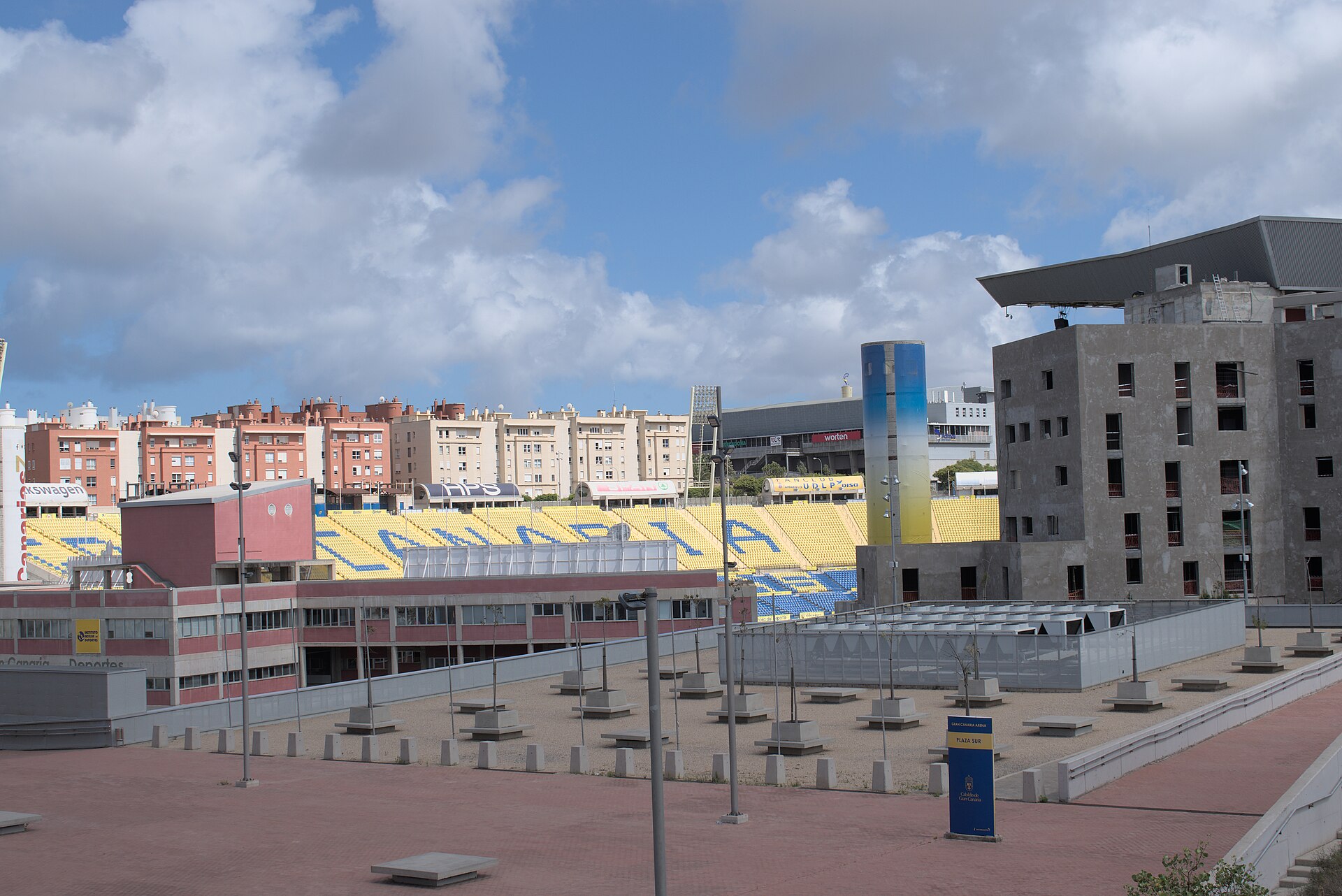
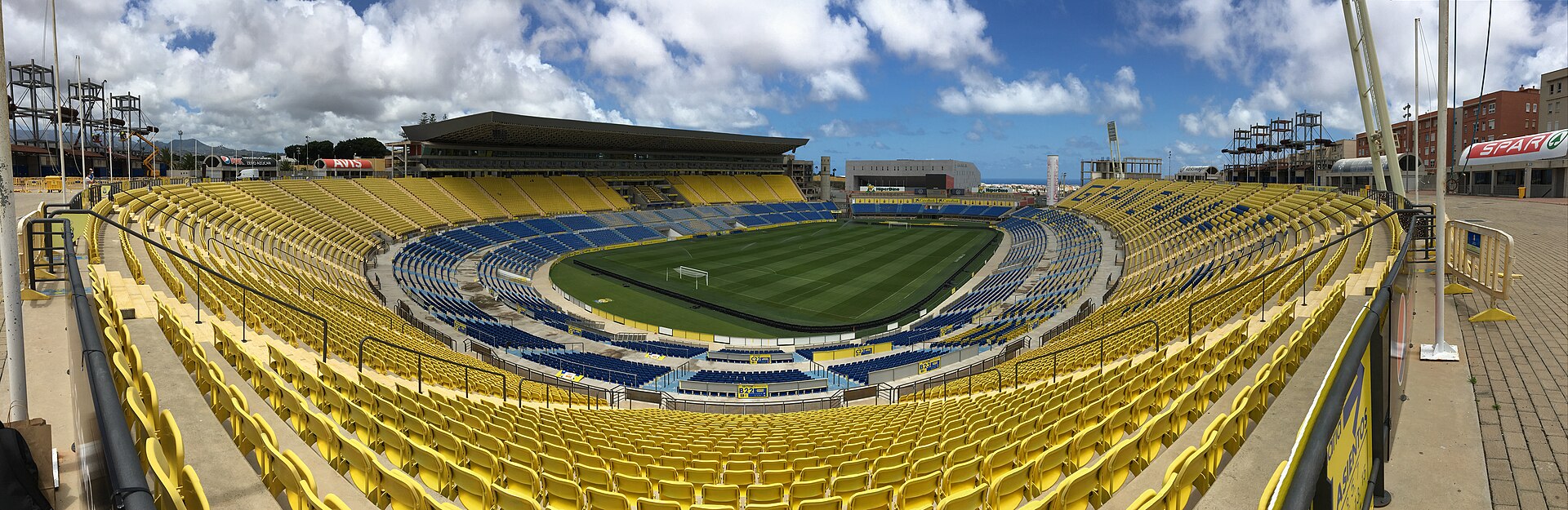
The siting of the Estadio de Gran Canaria dictates its character more than the architecture itself. It sits in the Siete Palmas district, flanked by civic buildings and concrete apartment blocks, placing it firmly in the urban grain rather than isolating it. The most striking feature remains the palette of the seats: thick bands of yellow and blue curve around the oval, a pattern that holds the eye long after the players have finished.
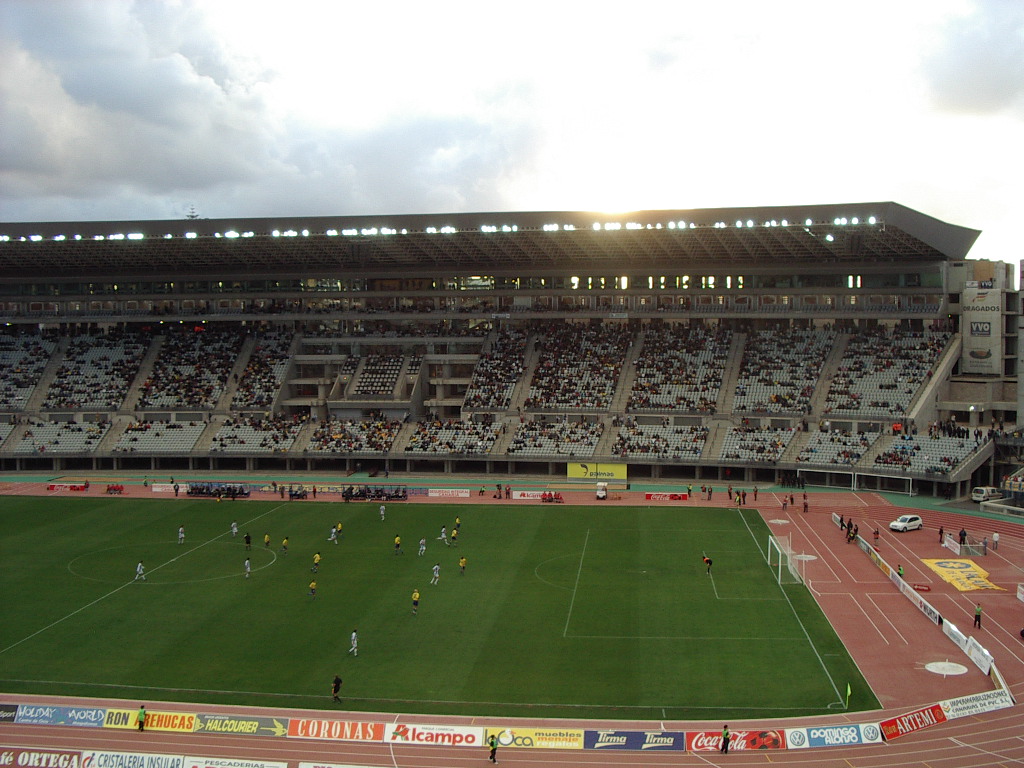
The ground underwent a significant transformation between 2014 and 2016 when the athletics track was ripped out. That removal altered the geometry of the bowl, bringing the stands closer to the turf and stripping away the multi-purpose function to focus entirely on football. The new concrete modules built atop the lower tiers added verticality, though the upper ring and roofline stayed much the same. The distances from the touchline shrank considerably, particularly behind the Curva, where the gap narrowed from roughly 42 metres to 22 metres.
Inside the bowl, the atmosphere is often driven by the proximity of the crowd. The capacity sits at 32,400, a figure that feels smaller than the footprint suggests because the renovation forced the spectators inward. The highest official attendance reached 32,037 during a La Liga fixture against Real Madrid, a match that ended in a 1–1 draw. The surface is natural grass, maintained through seasonal reinvestment in turf rolls to withstand the local climate.
The venue also functions outside of sport, hosting major concerts and rallies, but for local supporters the defining moments remain the league games. The relationship between the club and the stand is evident in the colours that coat the concrete; the yellow and blue are not just seats but a visual anchor for the city.