Jönköpings Arena
Jönköping, Sweden
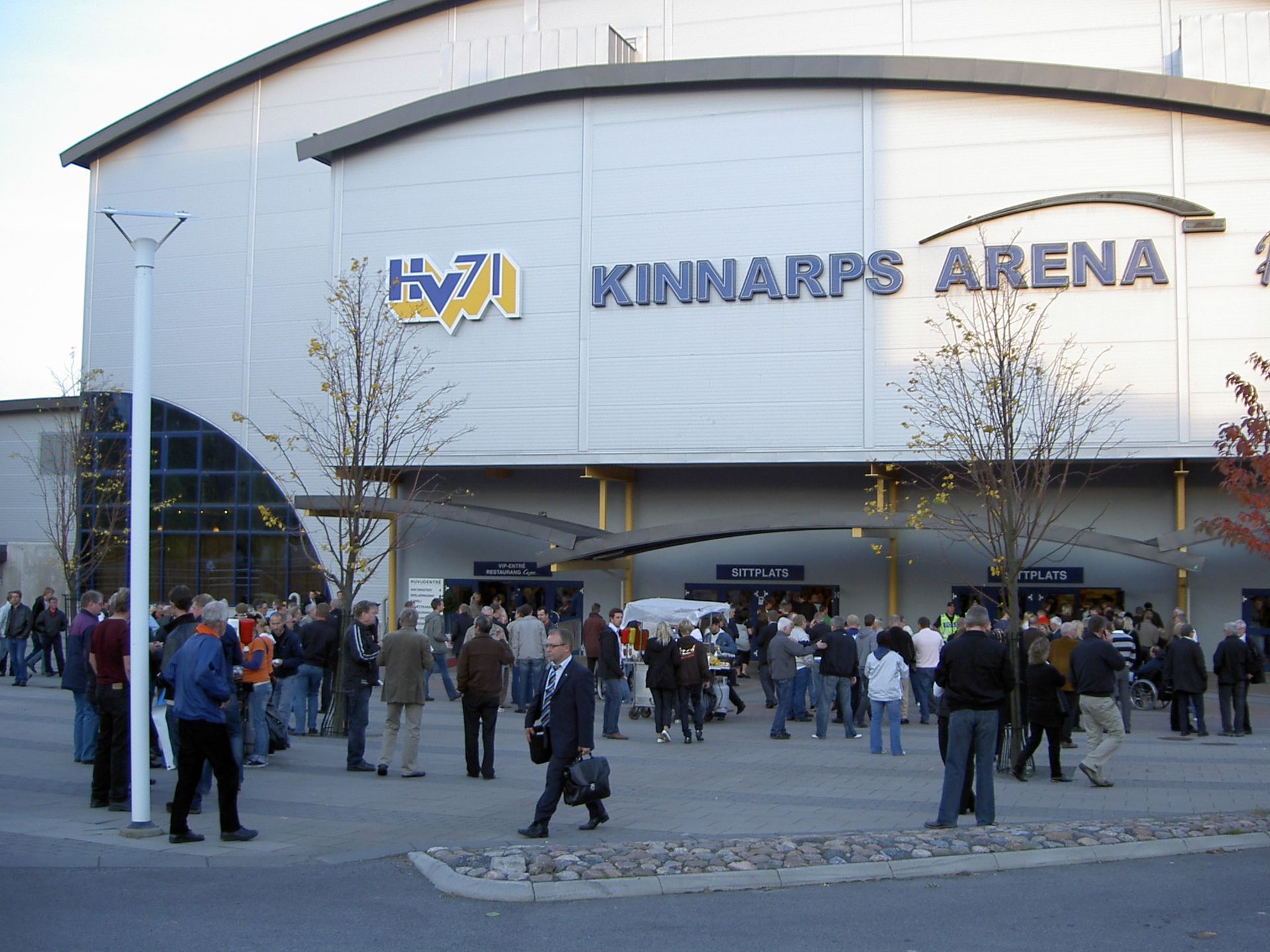
It is unusual for a sports complex to carry the name of a tool manufacturer, yet Husqvarna Garden does exactly that on its exterior. The building presents a broad, grey façade with a sweeping roofline and vast sheets of blue glass that curve into the sides. Unlike the more conventional Kinnarps Arena which sits nearby and buzzes with crowds, this facility looks as though it is waiting for a crowd that has not yet arrived. It is a quiet place, one that does not shout for attention the way a football stadium might.
Inside, the atmosphere shifts entirely. The blue steel beams of the roof structure hang overhead, framing an ice rink that looks pristine under the lights. A lone figure in dark clothing pushes a stick across the white surface, leaving a trail of scratches while the empty yellow seats rise in tiers around them. It is a scene of stillness, a stark contrast to the human activity visible at the entrance of the older arena where people mill about in coats before a match. The ice here is marked with a large red circle at the centre, but the silence suggests a time between games, perhaps a maintenance session or a warm-up for a team that has not yet filled the stands.
The building itself tells a story of function over form. It is not a temple of sport but a working machine for winter activities. While other grounds in the city host football matches with loud supporters, this venue seems to operate on a different frequency. It is a place for the quiet focus of ice hockey or the sharp sounds of a puck, rather than the roar of a football crowd. The modern design is practical, designed to keep the cold out and the game going, but it lacks the historic weight of a older ground. It is a space for sport, but it is not a shrine to it.