Krasnodar Stadium
Krasnodar, Russia
Formerly: Krasnodar Stadium, FC Krasnodar Stadium, Krasnodar Arena
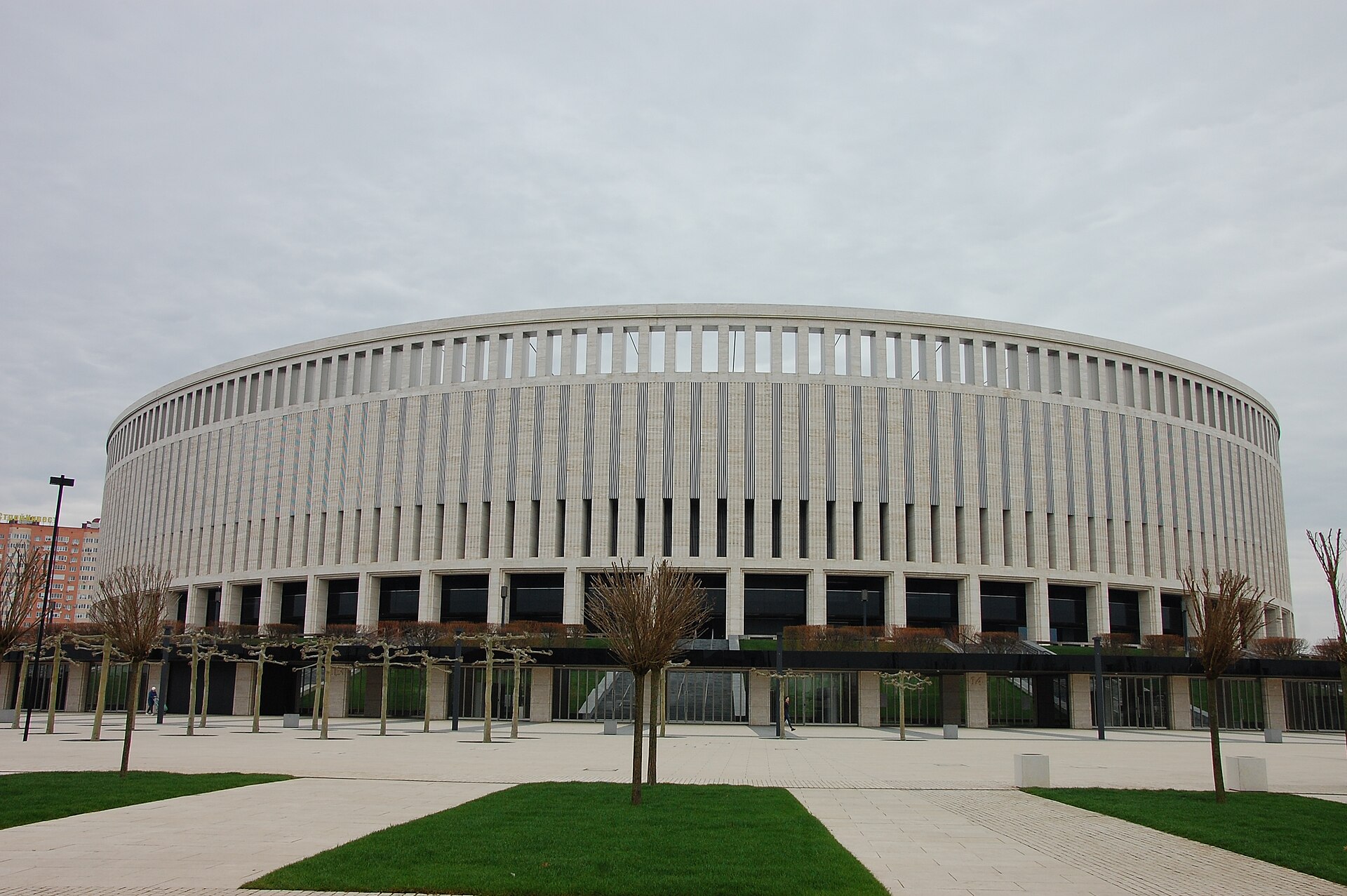
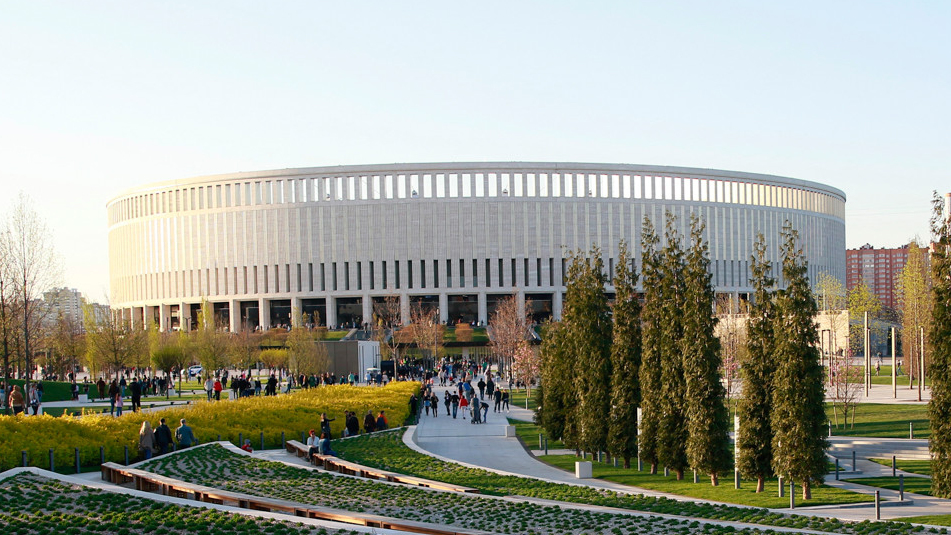
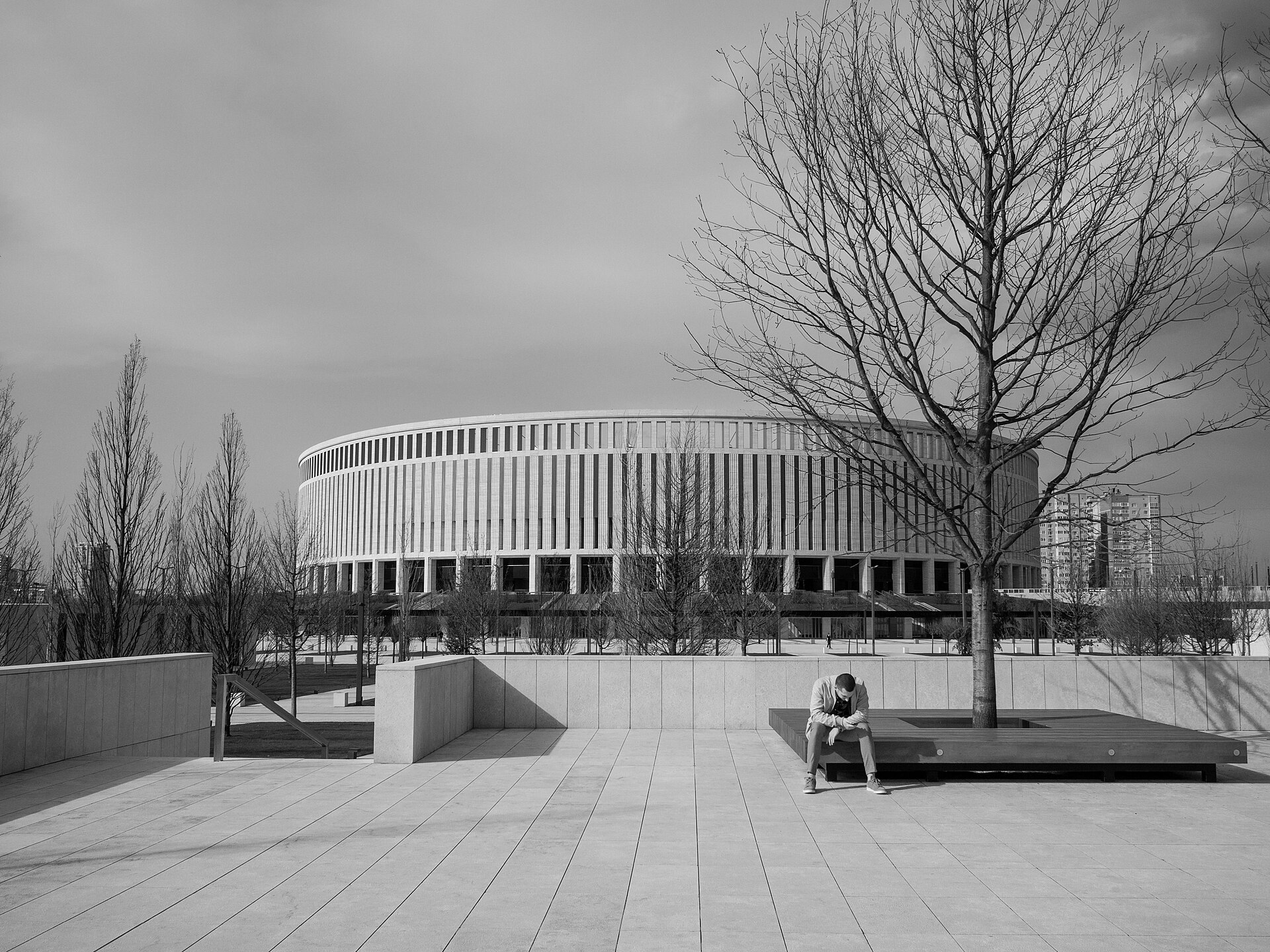
The structure on 1 Razvedchika Leonova Street presents a continuous ellipse, its surface broken only by a regular rhythm of vertical slits. There are no corners to catch the wind, only a smooth curve that seems to dismiss the surrounding city blocks. It is a building that insists on its own form first, the football operations inside becoming secondary to the geometry of the exterior.
Designed by a consortium including GMP Architekten and the Russian bureau SPEECH, the venue opened on October 9, 2016. The capacity is currently 35,074, a figure that has shifted slightly since the media zone was compressed in 2019. The playing surface is a hybrid system manufactured by SIS, reinforced with artificial fibers and equipped with undersoil heating and forced aeration, ensuring the pitch remains consistent regardless of the Krasnodar weather.
The stadium holds a UEFA Category 4 rating, a classification that allows it to host the highest level of European competition. This status was formalised after the venue served as a training base for Spain during the 2018 World Cup. The attendance record stands at 35,249, set on April 13, 2024, during a Russian Premier League match against Zenit Saint Petersburg, a crowd that exceeded the previous mark set during a European fixture against Valencia.
In May 2025, the venue adopted the name Ozon Arena following a naming rights agreement. The most prominent feature of the modernisation is a 3,700 square metre LED screen that wraps around the entire structure, visible from the wide paved approach. It was the first ground in the Russian Premier League to implement video assistant referee technology in December 2017. The building does not attempt to blend with the Soviet-era apartment blocks visible in the distance; instead, it asserts a distinct, circular presence, separating itself from the city it serves.