Lerkendal
Trondheim, Norway
Formerly: Lerkendal Idrettspark
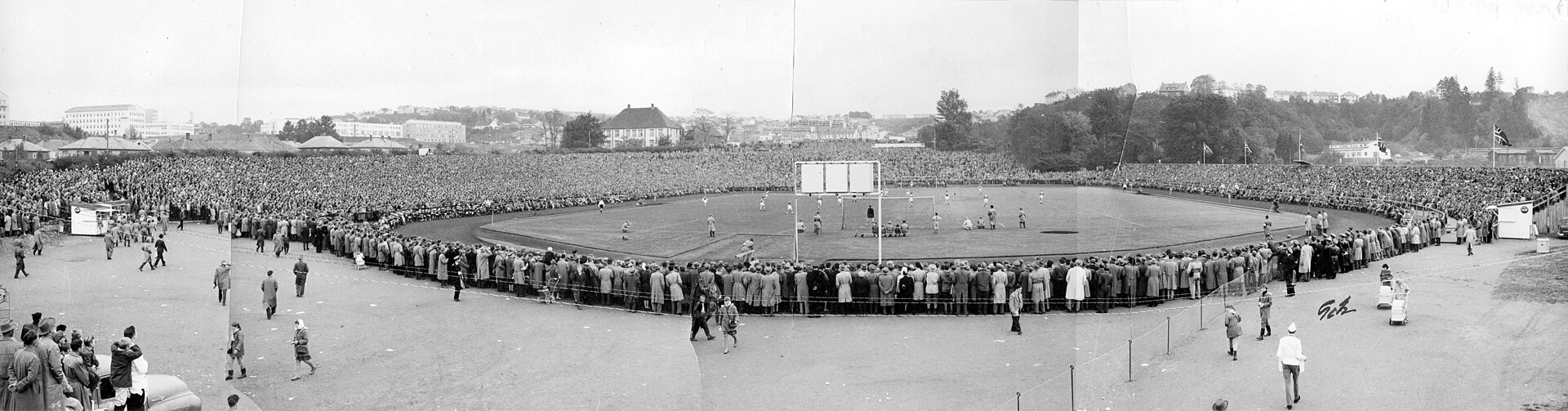
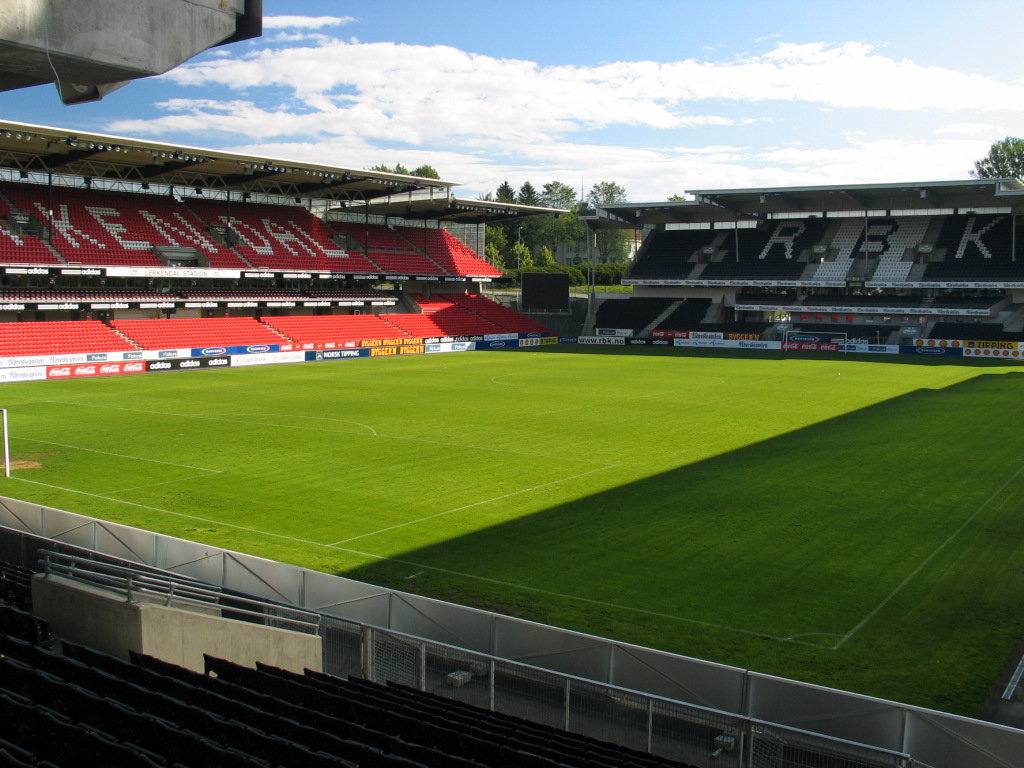
There is a track running around the edge of the pitch in the old panoramic photograph. Lerkendal Stadion was born as a public works project in the 1930s, opened on 10 August 1947 to provide employment, and for decades it served as a multi-purpose arena for athletics and football alike. The running track eventually vanished, removed during a major reconstruction between 2000 and 2002 that stripped away the athletics facilities to conform with UEFA security restrictions on standing places. What remains is a four-sided bowl where the stands are not uniform but distinct: the red seats of the Rema Stand on one side.
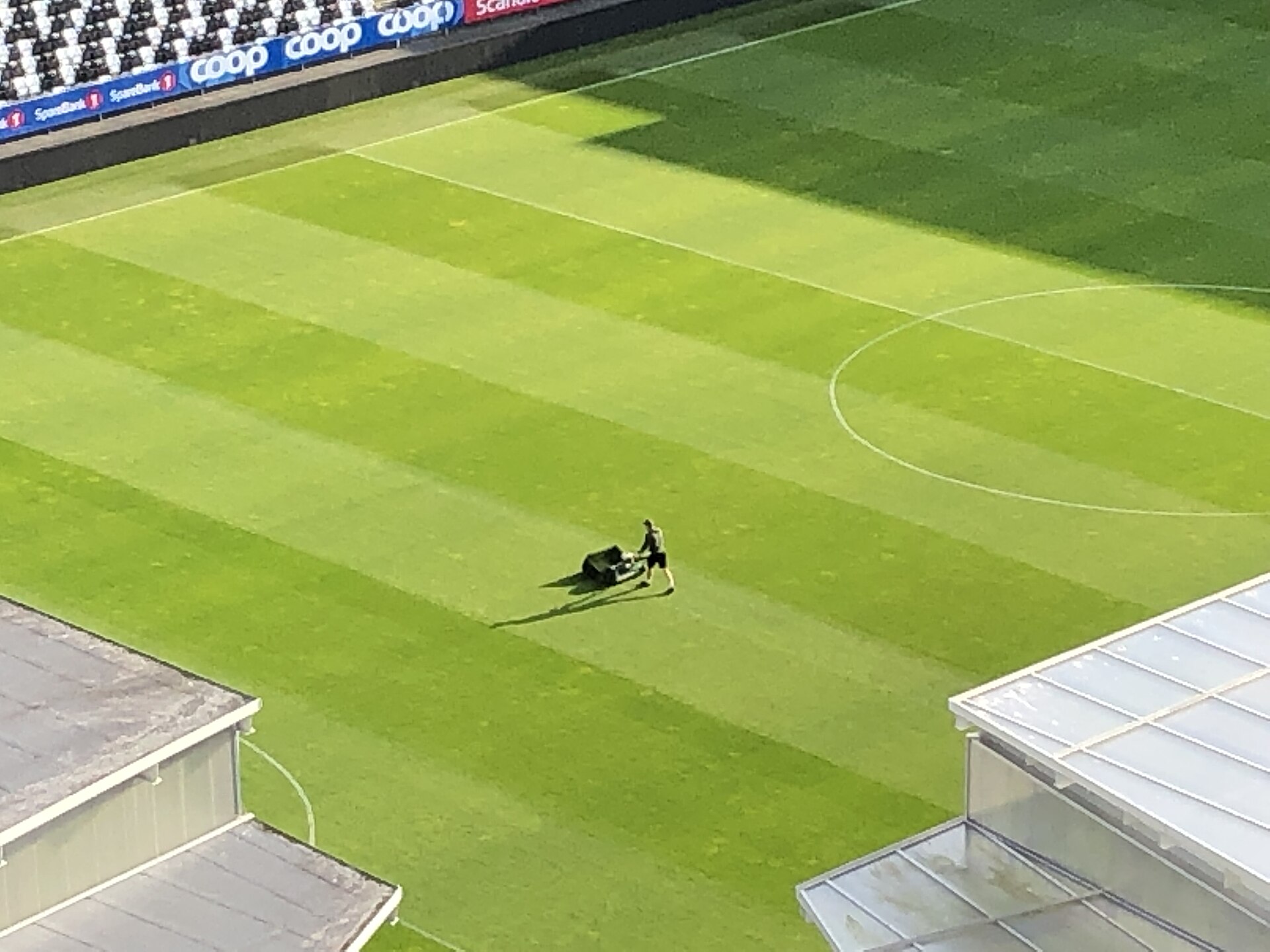
The surface is natural grass reinforced with artificial fibres, a hybrid system first laid in 1994 to strengthen the pitch for Rosenborg BK. The ground is not shy of history; it hosted ten senior international matches for Norway between 1951 and 1990, including a victory over West Germany in 1979, and it once staged motorcycle speedway events until 1956. The capacity today sits at 21,421, a fraction of the crowd that packed the terraces when an international match against Luxembourg drew 22,319 in 1965. The stadium has no single overarching sponsorship name, though its individual stands bear the marks of their sponsors, and the address Klæbuveien 125 remains a familiar landmark in Trondheim.