Stade Geoffroy Guichard
Saint-Étienne, France
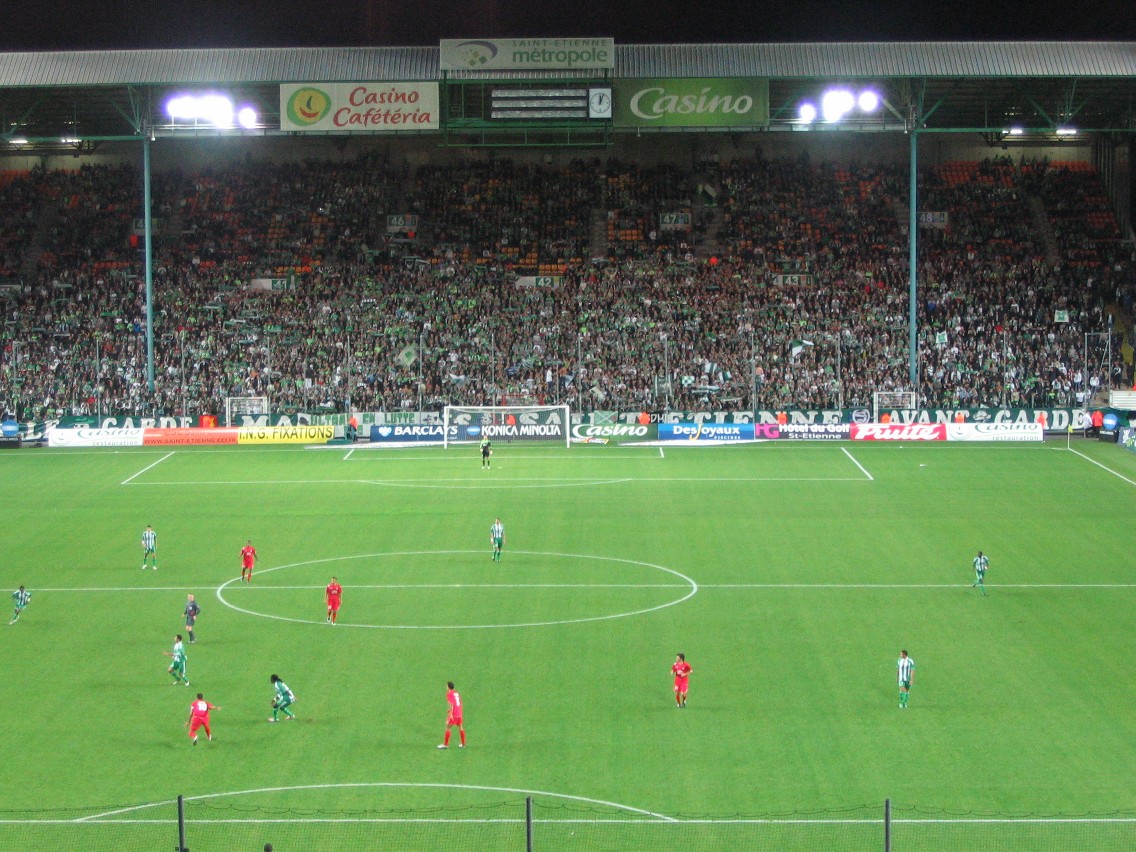
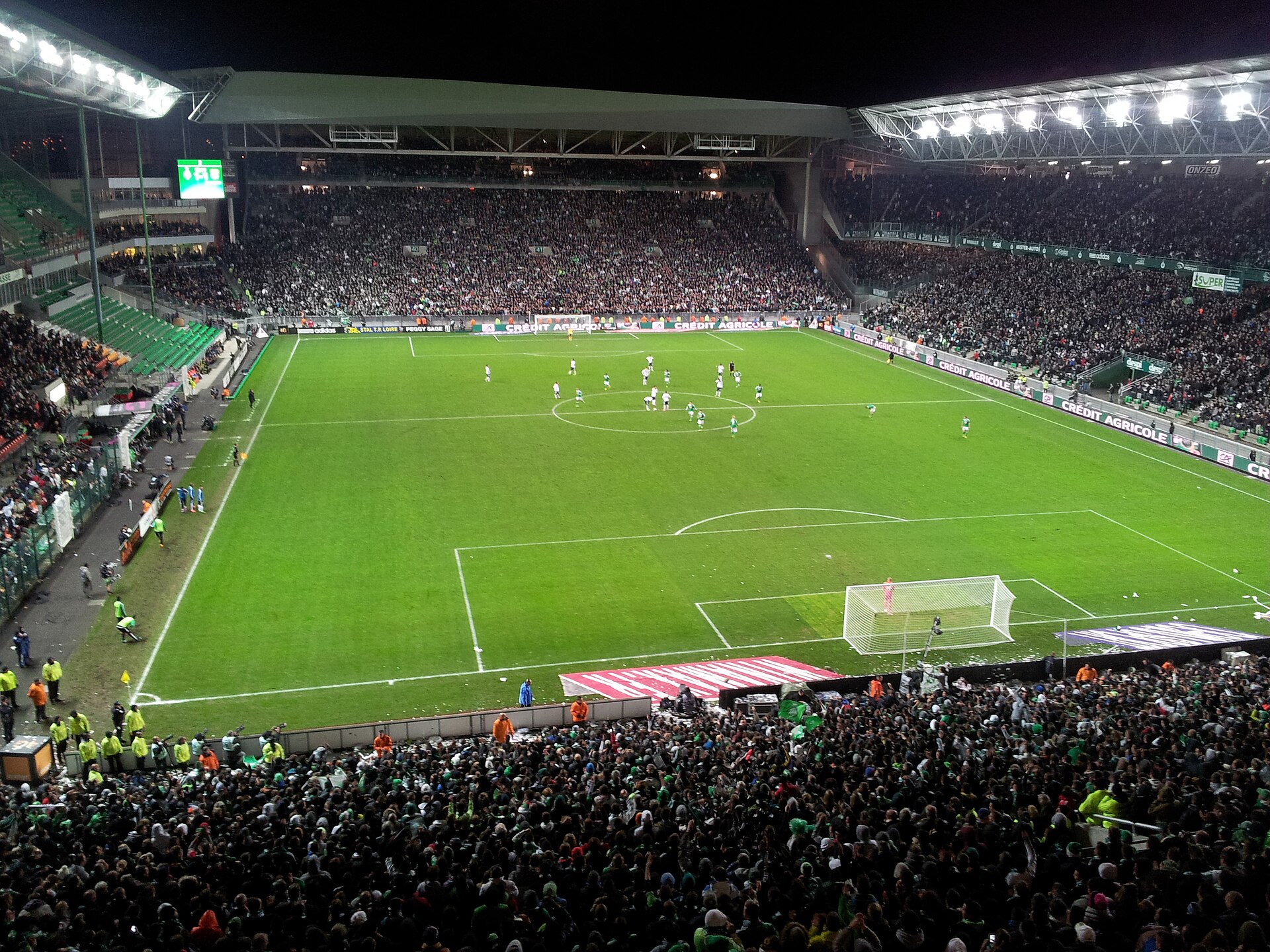
Where the city meets the pitch, the Stade Geoffroy Guichard sits not as a monument but as a container for noise. The stands rise close to the touchline. Because the terrace is so near, a high line gets picked apart before the ball even reaches the other side. The roof, a single metallic skin that unifies the structure, keeps the sound from escaping into the streets of Saint-Étienne.
The ground bears the name of the man who bought the land and built the club, a detail that anchors the place in its own history rather than the shifting sponsors of modern football. The architects Étienne Thierry Meyer and Michael Saidoun laid the foundations in 1931, but the structure you see today is the result of a relentless cycle of demolition and rebuilding. Each renovation was driven by necessity rather than vanity, whether it was the addition of plexiglass for the 1984 European Championship or the €56 million overhaul that preceded Euro 2016. The capacity swelled and settled around 42,000 bodies, a number that remains constant regardless of the decade.
On the pitch, the grass is natural, maintained by an under-soil heating system that fights the French winter. Shading sails are drawn across the area when the sun is too fierce, ensuring the surface remains playable. The lighting rig, updated with LED arrays in recent years, illuminates the field with a clarity that allows the eye to catch the smallest movement. When the visitors step onto the turf, they are greeted by a sea of green, the colour of the city and the team, a uniformity that turned to the kids in the lower tiers and tore them to shreds on the scoreline.
It is not a new ground, nor is it a restored relic. It is a working machine, built for the noise that rolls down the valley. The stadium itself continues to host the world, from the World Cup finals to the Olympic football tournaments. The history between the teams adds an edge, but the ground itself remains indifferent, a concrete and steel vessel for whatever drama happens within its walls.