Italy arrive at any tournament as one of the sides expected to go deep, even in years when the squad in front of the television cameras looks unfinished. The team plays its qualifiers and major fixtures mostly at the Stadio Olimpico in Rome, a ground it does not hold exclusively but treats as home more often than any other.
The side traces itself to a match played in Milan on 15 May 1910, a 6–2 win over France, and that date rather than any founding charter is what the federation counts from. The blue shirts came a year later, chosen in tribute to the House of Savoy, and gave the team its nickname, Gli Azzurri.
Four World Cups mark the record: 1934 and 1938 under Vittorio Pozzo, the only manager to win the tournament twice, then a long wait broken by 1982 and 2006. The 1982 run turned on a single afternoon in Barcelona, when Paolo Rossi scored three times to eliminate Brazil in a semi-final still ranked among the sport's great matches. The 2006 title arrived amid the Calciopoli match-fixing scandal engulfing Serie A that same year, and Italian football treated the trophy as answering that mess rather than being untouched by it. Dino Zoff, who lifted nothing himself in 1938 but became the oldest World Cup winner at 40 in 1982, and Gianluigi Buffon, who went on to make a record 176 appearances, gave the goalkeeping shirt a weight few other countries attach to the position.
France carries the oldest grudge, the fixture known as the Derby of Europe, sharpened further by the 2006 final and Zinedine Zidane's headbutt on Marco Materazzi. Spain brings the Mediterranean Derby, contested as often for tactical bragging rights as for the result, while matches against Brazil are billed simply as a Classic, two footballing cultures each certain theirs is the correct one.
 National team · Italy


 Belarus
 Andorra
 Italy
Italy
 North Macedonia
 San Marino

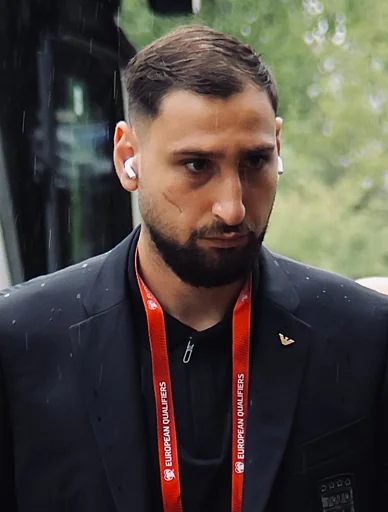

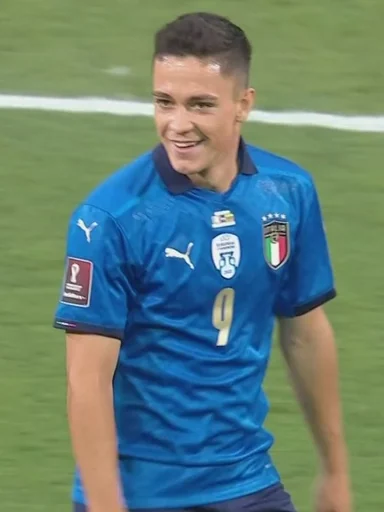
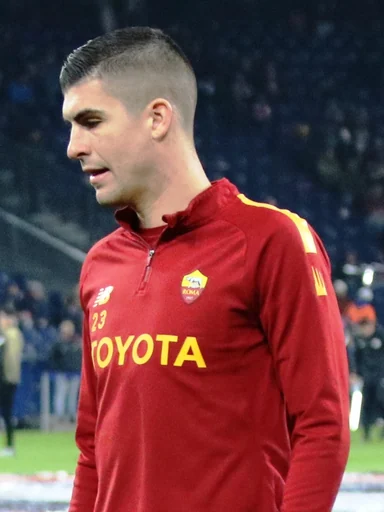

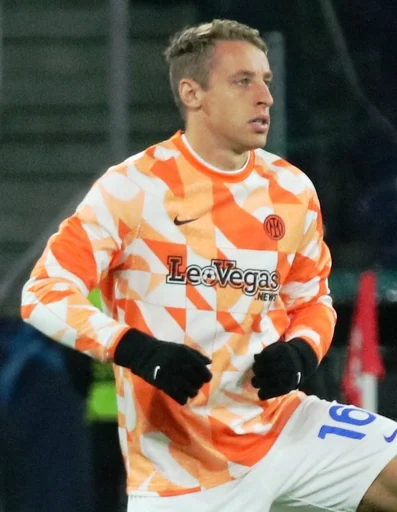
 Gianluigi Donnarumma
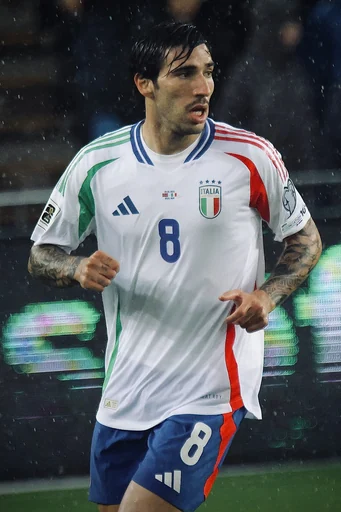
 Sandro Tonali
 Giacomo Raspadori
 Gianluca Mancini
 Davide Frattesi
 Riccardo Calafiori
 Marco Carnesecchi
 Niccolò Pisilli
 Giorgio Scalvini
 H. Ahanor
 Manuel Locatelli
 Alessandro Buongiorno
 Alex Meret
 Matteo Politano
 M. Palestra
 Bryan Cristante
 Federico Gatti
 Mateo Retegui
 F. Dimarco
 A. Bastoni
 Leonardo Spinazzola
 Mohamed Ali Zoma
 Issa Doumbia
 Giovanni Di Lorenzo
 Gianluca Scamacca
 Rolando Mandragora
 Daniel Maldini
 Michael Kayode
 Diego Coppola
 Nicolò Cambiaghi
 Guglielmo Vicario
 Alessandro Romano
 Seydou Fini
 Luca Warrick Daeovie Koleosho
 Fabio Chiarodia
 Filippo Calixte Mané
 Giovanni Daffara